
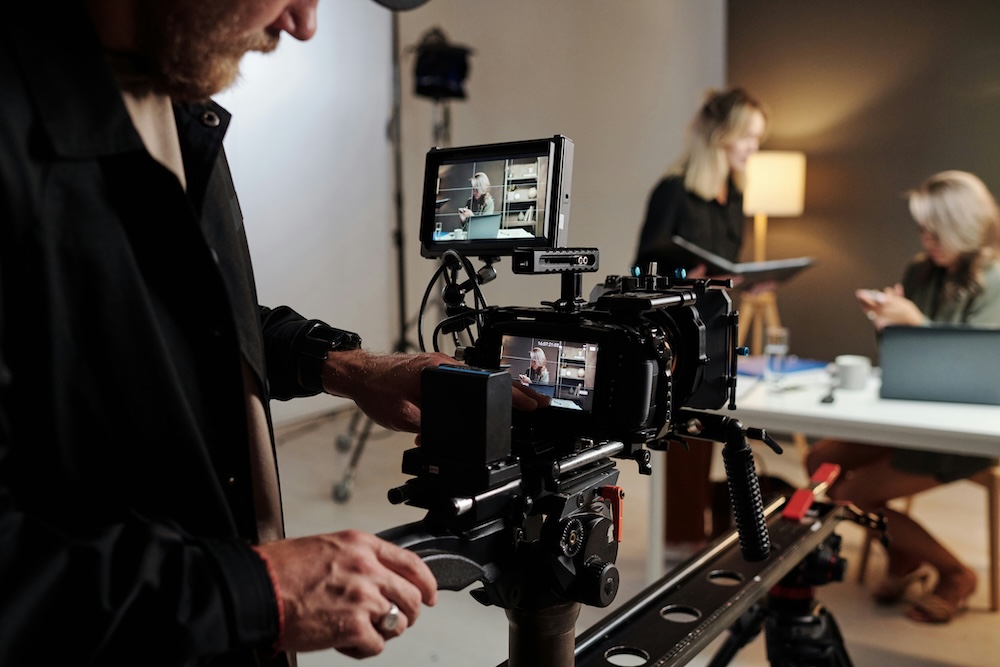
By Marie-Louise Banks, Clarity's in-house content and creative expert, specialising in high-quality production and content-led growth for B2B technology brands.
If you lead B2B marketing, you're probably building your 2027 production plan with one question behind every line item: could AI make this instead, for less? For a lot of video work, the answer is increasingly yes. Explainers, ad variants and localised cut-downs can already be produced faster and more cheaply with generative tools.
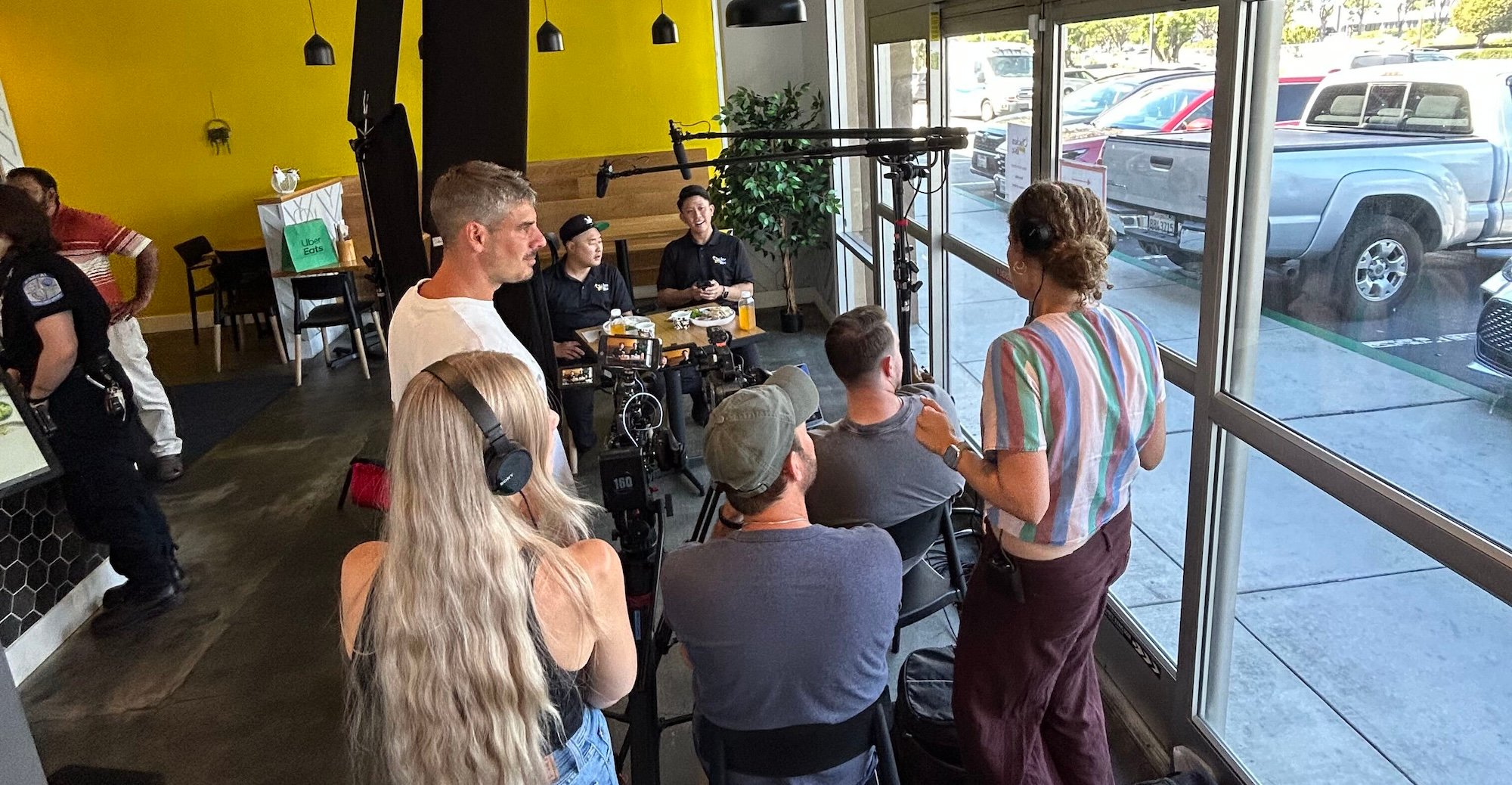
Customer case study videos are the exception. I was recently on location in San Francisco on a video shoot for a leading delivery company. The client tasked our creative team with capturing authentic stories of local restaurant owners to show the human side of the platform and encourage other business owners to join. Sitting in those kitchens and hearing owners talk about their businesses in their own words confirmed something for me: this is the part of a video budget AI can't replace, and the part where trying to would cost you the most.
Where AI belongs in your 2027 video plan, and where it doesn't
AI content still has a place in next year's plan. It’s cheaper and faster to make, and for some jobs that's exactly what you need. It’s worth it for:
- Paid media ads, where you need lots of versions to quickly test different hooks, formats and messages
- Product and process explainers, animation and motion graphics
- Versioning and localisation: resizing, subtitling and adapting one asset for different platforms and markets
- Pre- and post-production: research, interview prep, transcription, pulling the strongest soundbites and assembling rough cuts
Where it doesn't belong is social proof. A case study works because the viewer believes the person on screen is real and the result really happened. Generate that person and you've removed the one thing the video exists to prove. You can use AI to help sell, but you can't show a fake customer and still call it authentic.
There's a legal line here too. In the US, the FTC's 2024 rule on fake reviews and testimonials bans testimonials that misrepresent who gave them, including AI-generated reviews from people who don't exist.
So the practical split for 2027 is this: use AI to make production more efficient, and protect the budget for real customers on camera. The savings from the first can help pay for the second.
Why real customer stories persuade B2B buyers
For brands looking to inspire trust, filming real customers offers an unbeatable opportunity to demonstrate authenticity. Prospective partners don't want polished, synthetic pitch decks. They want to see people like them talking honestly about their growth, challenges and successes.
That applies well beyond restaurants and delivery platforms. In fintech, SaaS, logistics, professional services and healthcare, choosing a supplier carries real risk for the buyer, and the decision is usually made by a group rather than one person. Each of those people is looking for evidence from someone they can relate to: a finance lead who switched platforms, an operations manager who cut delivery times, a business owner who grew their orders. A peer saying it on camera does work that a brand's own claims can't.
Most of us have now seen an AI-generated spokesperson in an ad. The delivery is smooth, but the details give it away: the eye contact, the even lighting, a script with nothing specific about the business. Once viewers notice, they stop believing what's being said, and the brand takes the hit.
In one case, Henry’s Boots, based in the UK, were using AI images that claimed ‘Henry’ had spent over 30 years handmaking leather boots and was closing his workshop. The Advertising Standards Authority were notified after customer complaints, and found the images of the man were AI-generated and that Henry wasn’t a real person, so deemed the ads misleading.
On set in San Francisco, the most useful moments were the unscripted ones. Genuine reactions, spontaneous laughs and real locations are far more convincing than anything AI can generate.
What AI labelling rules mean for brand content
Regulation is moving in the same direction, though not in the way the headlines suggest. Most AI watermarking is invisible. Google's SynthID embeds a watermark in the content itself that is designed to survive screenshots, resizing and compression, while the C2PA's Content Credentials standard attaches metadata recording how a file was made and edited. In May 2026, OpenAI said it would add both to the images it generates.
The law is now building on this too. Under the EU AI Act, transparency obligations have applied since August 2, 2026: AI providers must mark generated content in a machine-readable way, and organizations that use AI must disclose deepfakes, meaning realistic content that falsely appears authentic, which can include depictions of people who don't exist. California's AI Transparency Act, which applies from the same date, requires large online platforms to detect provenance data and show it to users.
So what does this mean for brands? For most content there won't be a large 'AI generated' stamp. But the signals are in the files, platforms are starting to read them, and a realistic synthetic 'customer' is exactly the kind of content likely to need disclosure. For premium brands, being seen to pass off a synthetic person as a real customer would cost far more trust than the production budget it saved. Expect the brands that care most about trust to use AI behind the scenes and keep real people in front of the camera.
How to plan case study video for 2027
- Protect the budget. Treat customer stories as the line you protect, and pay for them with the savings AI makes elsewhere.
- Recruit customers early. Approvals on the customer's side, from legal and comms teams, often take longer than the shoot itself. Start conversations in Q1 for anything you want live in the second half of the year.
- Get the most out of every shoot. A single day on location can give you a hero film, short cut-downs for paid and organic social, clips for sales teams, stills, quote cards and a written case study. Build the shot list around all of them.
- Brief for specifics. Ask customers for numbers, before-and-after comparisons and the moment they decided to switch. Details are what makes a story believe, and it's the one thing AI can't replicate.
- Take photos on the same day. It costs very little extra and gives you useful assets for your blog, social channels and events.
- Let AI help you. Transcription, soundbite selection and versioning can cut post-production time and get more formats out of the same footage.
- Track how sales uses it. Ask your sales team which stories they share and at which stage of the deal, so you know which customers and industries to film next.
What I took away from San Francisco
I came home from that shoot more certain of where B2B video is heading. AI will make a lot of production cheaper, and marketing leads should use it for that. But the part of your plan that proves you deliver for real customers should stay human. If you're deciding where to protect the budget for 2027, start with your customer stories. The more AI content there is out there, the more the real stories will stand out.