Find the full transcript here:
Jodi (00:01)
Paul, thank you for joining me on The Finite.
Paul R (00:03)
Jody. Thank you for having me.
Jodi (00:06)
But it's great to have you here. I feel like we've already had such a good chat. I'm already into it, really excited. Now let's just let the listeners hear. Let the listeners hear all the good insights. So before we do, tell us about yourself. Where are you? What are you doing at the moment? What's your role? What's your background in marketing?
Paul R (00:28)
cool. Awesome. Yeah, so so seriously, thank you so much for having me and I love what you're doing and I and I love that you have content that's you know, very specific to people who are kind of wrestling with what does marketing mean even in this new world that we're that we're that we're leaping into and and you know it's it's awesome but it's also got some challenges. So thank you very much for what you're doing, putting together this kind of these these dialogues. So thank you for that.
Jodi (00:50)
that's very sweet.
Thank you.
Paul R (00:54)
so right now
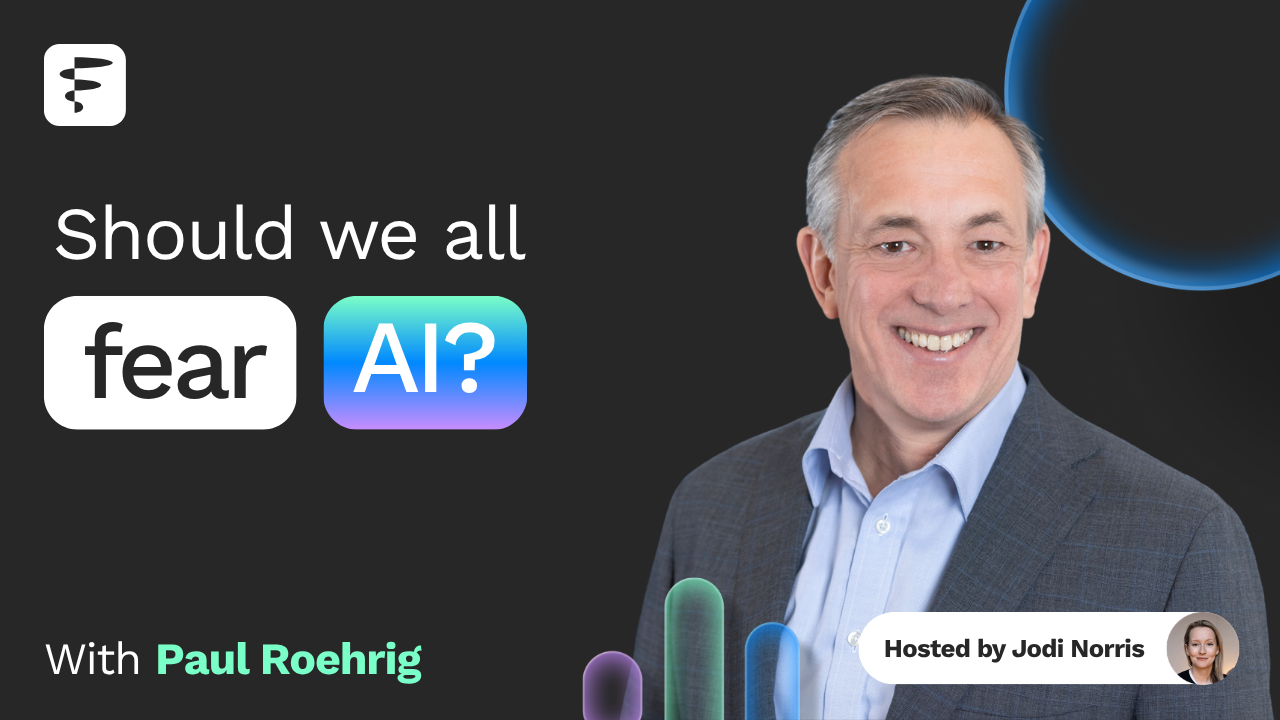
I had strategy and marketing for Ascendion, and we're an AI native software engineering company doing you know important work for some of the biggest companies in the world globally. And so we have thousands of engineers and thousands of agents that those engineers are using. And we are at the very cutting edge, based on everything we've been able to figure out, on on putting putting
the right kind of AI into the hands of of trained engineers, human engineers, to be able to deliver impact and value from that intersection of humans and technology. And so right now I'm I I'm in New York and and but I travel around pretty regularly and and that's what we're up to.
Jodi (01:41)
Sounds good. And your chief strategy and marketing officer there. How big is your team? What's kind of top of mind in marketing for you at the moment?
Paul R (01:50)
So that's a great question. So the team is we're d we're we've decided and taken some decisions to keep the team of humans relatively modest. but we have a great partner ecosystem and more and more we're using AI to improve productivity of everybody on the team. So so when we do our best efforts at at creating
sort of ROI, if you will, on of AI for this team, we've basically roughly been able to double the the impact of our program budget. So we have people that are more inclined to use AI basically along every workflow of the marketing process, whether it's content generation or campaign planning or things like that. so it's giving us a huge productivity boost.
so th we're that's one of the things that's top of mind is how do we how do we punch above our weight? How do we take a team of people that's inclined to use AI so that we can all be more productive and tell the stories that we need to tell more effectively and efficiently.
Jodi (03:03)
Cool.
Sounds really exciting. and I hope we get to dig into some more specifics about that. but first of all, I know that you you've written book after book, you're a bit of a futurist, you make predictions, you look at back in history, you
Paul R (03:21)
Mm.
Jodi (03:22)
I feel like you were
We've been underselling you so far. you're not just a
Paul R (03:27)
Mm-hmm.
Jodi (03:28)
chief marketing officer as well. You're a technologist and you're thinking about technology critically and the way that society interprets it and takes it up and and how marketers as storytellers are really framing that transition. So, what are your thoughts around that? I know that within your team they seem really enabled to take up AI.
Are you seeing that same kind of trend within the broader consumer or B2B landscape?
Paul R (04:01)
absolutely. I think everybody right now is kind of in the same inflection mode. And you mentioned sh you know, I do look at history, these big technology shifts and different industrial revolutions. you know, and you're sitting in the homeland of you know, of a couple of actually, in England, where y you know, we we you know, historically, you know, the generation of the last industrial revolution, if you will, sort of had its had its taproots
in in the UK, and then somewhat also in in in the US in terms of creating some of the machines that powered the industrial revolution. And then I feel very much like when you look at the historical parallels, whether it's the invention of the steam engine or the electrification of of businesses, I've I think more and more we're kind of at that inflection point now with AI. So we've
Right now seeing a lot of headlines and let's be honest, right? There's a lot of failed pilots and frustrated people and and CFOs looking like, wait a minute, I just spent all this money and you know, where's the value? And it's it's obviously not a great thing, but it's also not a surprising thing. Because in un in d other industrial revolutions, the same similar kind of trends have happened. People have struggled at the early days of trying to figure out how do you use technology and
You know, full credit to Karthik, our our CEO, because as soon as he's he's had twenty years in in data and AI, his whole career with basically has been in in data and then the deployment of artificial intelligence. And so when when generative AI came not just online but more into kind of the public hands and zeitgeist, we looked at that and said, This is amazing. We were already doing software engineering using
machine learning and different forms of AI and then that came online and we were like, okay, we're all in on that. So that has been served us well, in fact, because we were we haven't gotten it all right, but from a marketing perspective, trying it and using it and learning the edges of where the where the platforms and the agents make more sense and less sense and where the human really has to stay on top of things and put in our creativity and our passion and
and our empathy into how we tell beautiful stories. that's been a phenomenal learning experience that I think does in many ways parallel some of the other shifts that have happened throughout history as we've as humans have embraced these new technologies.
Jodi (06:41)
Yeah, it's of so often you hear from CMOs that, you know, Chat GPT generative AI came along and and blew everything up and it's been frantic. But if you've been building towards that for the past, you know, twenty years, this is your expertise area. This is this is an opportunity for you to lean into those stories of innovation and inspiration. And finally, AI just feels so abstract, you know, until you use it, until you use an agent, you really understand what it is and what it does. Like
Did that did you feel like that kind of boom really helped your cons customers and pr prospects really understand what you were doing at a greater level?
Paul R (07:20)
absolutely. I mean, if I if I step back and look at some of the how it has improved storytelling, 'cause to me marketing, you know, any sort of effective marketing starts with what's a story you're trying to tell. And whether it's y you know and the the other kind of thing that it's kind of a not a pet peeve of mine, but it is something that I kind of am annoying about, which is B to B marketing is we we we talk about it like it's a business what is a business? I mean business is
made up of humans that are trying to interpret data and stories. And so I I see a lot of similarities. You know, yes, obviously the the channels and things are different from a b in a B to B from a B to C to a B to B context. But we're still talking to people. and for us, AI has helped us I I you know, and I can see in the data shows, right, has imp helped us improve our storytelling and our n you know, how do you strengthen a narrative and how do you
plan better and how do you manage things better. how do you use ha AI to create more content in line with a story and then correct the story because you're n nobody's gonna get it right all the time, right? So it helps you iterate faster or that helps us iterate faster. So you're absolutely right. I think w the when when AI became more kind of democratized, if you will, and we we all got our hands on it, the first thing we did was
Play around with it. But then very quickly what we did was, okay, how can we actually deploy this so that we're getting some real value out of the use of this technology? Where the essential story has to, you know, really be human-led. There's no no doubt about that. But the AI enabling does create what I think of as enhanced marketers. And the whole team is depending on your role, you're using AI in different ways. And we're all kind of figuring out.
you know, what's the best mix of how do we you know ha have humans and enhance the human productivity and performance and quality and so on and velocity using these these AI systems, which is exactly what the larger company is doing with software engineering.
Jodi (09:36)
Hmm. Awesome. Yeah, I I totally agree. I it's one of my favorite questions to ask CMOs at the moment is because we heard for so long, you've got to have the human touch or you've got to have the balance between human and and and automation. And I'm like, okay, but what does that actually look like within your team? So really defining those boundaries,
And and processes as well, because you can't automate the whole thing and it makes sense to automate most of it. So yeah, what do those boundaries look like? I am interested in what good storytelling looks like to you though, in respect to AI. It's a conversation that also comes up a lot, especially in questions of you know positioning. How do you position AI now? What a what's your true value now? In terms of you the storytelling that you've done for Sineon, or maybe
storytelling that you've noticed has worked really well for other brands. You mentioned before it's about making it human centric. Could you elaborate on that a bit and tell us what that actually looks like in practice?
Paul R (10:42)
Yeah, so that's a great question. I and I love how you frame that. So let me l let me kind of unpack that from a process perspective and then from a story perspective. So from a process perspective, like from a workflow, like how do we do this? Like one of the things that we learned, you know, and I'll just be completely open, is we kind of leaned into it a little bit too hard at the beginning, right? And some of the and you could see, you know, the tells of where we were kind of overusing it.
And so what we did was we backed away a little bit and we did modify our process. And right now we're working towards this kind of rubric where your f the first touch has to be humans. Like human hands have to craft something, right? Like if let's just say it's a campaign messaging, right? Just something, you know, we do every day. Right. And so what's the idea? What's the hook? What are you trying to do? Who's the audience? All of those things
AI can help you, but I we have found that putting your f putting your ideas first helps you work more effectively from a process perspective to get the best of the AI. because now the human is in p is is adjudicating what the AI is is delivering back. Because you have a concept, you have an idea, you have a you know, you have a story, you have a whether it's a song or a story or some sort of visual storyboard.
you have something in your mind and and that's critical. And then there's this kind of pas de do where you're dancing with the platforms and you're going back and forth and we're all learning how to do that better. and I just think part of that is just reps. You just need to do it and do it and do it so that you learn how to engage with whatever systems that you're using. And then we have a an a an idea of the last touch. So the last touch has to be human hand. So where we
kind of put the hu the human voice and and and vibe, if you will, back into the storytelling. So the first touch and the last touch is really, really important. And then everybody's gonna have their own kind of how they do things and it's depending on what asset you're working on, what kind of story you're working on, where you're gonna bounce back and forth so that you become enhanced rather than abdicating you know, creative storytelling to the to the machine. So from a process perspective, that has helped us
avoid kind of the this work slop. Let's just call it what's my favorite word of the decade so far. So we're that's one way that we're avoiding it. From a story perspective, having that first touch and last touch keeps the storytelling in the in the human voice. And the AI has been really great at helping crystallize that providing insight and guidance. But
The one thing that we can't do from a storytelling perspective, then we've learned this by messing it up candidly, is to maintain the authorship of that narrative. The the bot is not going to give you you know we've trained them based on human knowledge. And so they're designed to deviate towards the mean. They're not designed to give you the creative outlier.
from a story perspective, which is what really good marketing is. I mean, think about the campaigns that have really kind of landed and and and you know gotten into the zeitgeist or yet you know, those are all, you know, they're human centric, right? There's n and the the AI may help you get there, but it's not gonna give you that. That's where the human spark from a storytelling perspective really has to be maintained and and kind of you know nurtured throughout the process. And so
That's from a process perspective and a storytelling perspective. And that's what we're just we're still trying to figure it out, but we're getting pretty good at it, I think.
Jodi (14:39)
Yeah, no, I love that. I love that breakdown actually, and it makes so much sense. I know that a lot of CMOs are now obviously using agents who are trained to make decisions. Do you think that those decisions themselves need some kind of human oversight as well? Or are those I don't know. Are those
What's
the extent to which you would allow an AI agent to run on its own course? like if it's an ongoing kind of campaign rather than just a piece of content, for example?
Paul R (15:24)
yeah, that's a great question. So in terms of kind of autonomous agent activity, it's pretty tactical, honestly. It's more like what you would use with a like a to make sh make sure that this content doesn't have a grammar error. Like I'm okay with with that and I'll but I'll still personally will I'll still read it 'cause sometimes I like to break grammar rules sometimes. but the but
you know, completely like we had this dialogue internally about could we have a one a one click campaign? Which I you know, I just said it out loud one day and I was like, I wonder if that I wonder if we could achieve like you have this idea about campaign about X and could could you create an autonomous set of agents to be able to do that? And the more I learned about that
how this is working in the real world, the more I realize that that's a that was a pretty bad idea. So it might be a good like theoretical position, but I I wouldn't abdicate any of the of the things that make us human to a machine. So it gets back to that kind of how to do where you're trying to get you're trying to work with the machine, not abdicate authority, responsibility, autonomy
to an agent or a platform. that said, right, do you run a spell check on your Word doc, right? With yeah, you kind of do. I mean we all kind of do that, right? And and the the robots are really good at that. But then you still have to go through and go, no, I really w I wanted to I wanted that clump of words with the wrong punctuation there because that was part of the story I was trying to tell. So that's where I have to adjudicate well all of us, not just me personally, but we all have to adjudicate
Jodi (17:17)
Mm-hmm.
Paul R (17:19)
what is the robot
telling us or suggesting to us and not taking that as you know some sort of canon.
Jodi (17:28)
Mm.
Paul R (17:28)
I'll give you another example. So speaking of canon, one of the things we're working toward is canonical prompts. So we have a brand voice and a brand architecture and a message architecture. And we ask the question like can we put this in a prompt? So that if I have a story or I want to respond to something or I want to create a
some sort of mailer that we want to send out related to something that we're doing, can I can I create a prompt that puts it in Ascendion's voice more? So we're we're experimenting with that right now with a canonical prompt and we're figuring out what are the edges of how do you describe how you want your voice to be to an LLM system. So it gives you a running more of a running start in the story. So in that case I did use an agent
To create the canonical prompt. And we're still experimenting with that. So some of it's worked out okay, and but we still are tweaking it.
Jodi (18:28)
I think it's so interesting seeing the different kind of spectrum of of CMO and automation and how some people are just pretty much automating everything, letting AIs make decisions on when to send a lead form or when to send a demo or all of this stuff or and make the emails themselves. And then you've got these CMOs like the one that's coming out, that's just been released, who are really par pairing back
The quantity and focusing so much on quality and creating, like you say, those really human-centric, human voice, human touch, touch points for for audiences that arguably might make a bigger impact than just like another email in your promotions inbox. So it's really interesting seeing the different spectrums happening there and the kind of
the almost a divergence of of what people are going for and and how they're thinking about it.
Paul R (19:33)
Mm.
Jodi (19:34)
but ultimately, yeah, I don't I don't actually know if marketers need to worry about this whole death of critical thinking as well, because you're you're so right. it's about having that creative touch and and steering away from the mean and actually saying something different. Do you agree?
Paul R (19:54)
absolutely. I think I mean look at the stories that that resonate, right? I mean it depends on you know, what is it? I read some there's only like seven different stories, right? Or some something you you know, it's that everything sort of con con you know, connects to. It comes down to the human it comes down to the human interpretation of of what is the story that you're trying to tell about
something that has an emotional resonance with the people you're trying to engage. Right? And a robot is gonna help you do that, but I don't think a robot is, at least not anytime soon, gonna be able to I don't think we're ready to abdicate that. I don't think that that and I don't think that's warranted either. I think to not use AI is is is you know potentially even more of a problem because now now you're saying, okay, there's this technology where I can access, you know, a huge amount of
of insight and patterns f that have been, you know, generated over centuries that are encoded into this thing. why would I not work with that? I mean that's just like, you know, you can you can work without electricity too, but y you know, you're gonna be at a pretty niche market if you're gonna do that. so I think we're at a really interesting point now where we're still trying to figure that out. I mean, candidly we were you know, we've done that again back to history. I mean, with every industrial revolution, you know.
How do you do a railroad? What does a railroad do? You know, some countries, in fact, you know, Britain wasn't one of them, but some countries said, We're, you know, okay, I see that we can build this train, but we don't want to do that. and and they sat out, you know, big chunks of the Industrial Revolution. I think that that would be the same kind of mistake if we were like, no, no, no, don't use AI at all. So we're really renegotiating the terms.
of our engagement with a with a cognitive technology that has never existed before. And you can either look at that and go, well, this is terrible. This is gonna, you know, it's gonna wreck our economy and, you know, end creativity and social unrest and all of this, you know, is gonna be terrible. and then on the other side you've got people like, no, this is gonna make everything perfect forever. And I don't think either of those things are really going to happen. but I get that opinion because I'm wrestling with it every day.
So we're trying to find the edge case, the edges of where can these systems help us tell better stories, engage people more effectively, you know, build more emotional resonance, tell these authentic narratives that have you know meaning to the people you're trying to communicate with. And then the rest of it is just kind of tactics.
Jodi (22:40)
Hm. Absolutely. Well I mean, have we've seen in history that electricity, railroads, for example, they all have, you know, an endpoint. You know, we don't want to use them more than we don't want to use electricity more than we want to use electricity. Or railroads. We don't need to make a railroad into space now, do we? I mean, some people might want that. Elon Musk, I don't know.
Paul R (23:01)
I don't know about that. Yeah. Elon's I don't know what he's cooking up.
Who knows?
Jodi (23:05)
So do you
think that that that that that's the same with AI? Like we will reach a point where we're like, right, okay, this is the maximum amount that we will use this and that's okay and we'll we'll take it from there and focus on the next technology after.
Paul R (23:20)
Yeah, I mean that th that is probably the most likely scenario based on history. So we've decided as as humans, where do these things end? What do we want them to not do? And we're wrestling with that, right? And there's no and everyone's gonna have a different opinion and different societies and cultures are gonna have different endpoints and how they engage with these new technologies. And that has also been true throughout history, right? And that's okay. I don't think of that as a as a as a
catastrophic thing. It doesn't mean that things aren't going to go wrong, right? There there will be unintended consequences. And so we can either go, okay, hold on, like put st pump the brakes. We're not gonna do anything. and then we we miss out on the advantages of of this technology. or we just let it become unfettered and and just deploy it everywhere and hope for the best. And I think either of both of those are
you know, potentially not healthy in the long run. And that's what's driving the debate. So the debates and the disagreements that are coming up now around AI, personally, I think those are good. They're good things to have. you have the same thing with electricity, right? Going back to that, you know, and I went back, I went down this rabbit hole where I looked at headlines from the late eighteen hundreds and early nineteen hundreds.
Which is available now to the internet, which is another really interesting technology. and you c so you can find all of this stuff. And so I was looking at these headlines, and if you swapped out electricity with artificial intelligence, the headlines are basically the same a hundred years later. And because we were wrestling with the same kind of problems, no, and you'd read these these things where London and New York were getting electrified and the you know, the newspapers of the day would come out with like death from above, you know, you're gonna, you know, this is gonna
electrocute you and they'll interview Nikola Tesla on how to not get welded to the street. And so th those are the r and and exactly the same thing is happening now and when it's with about AI. And I look at that and actually am comforted in that because we have tamed, if you will, electricity. It's still dangerous, right? You can still get hurt. It can still cause damage, but we've figured out how to coexist with
The harnessing of this technology.
Jodi (25:48)
Yeah, that's really interesting. It makes me think, you know, those examples of headlines. They're almost villainizing the technology itself though, as if the technology is itself is evil. But like
Paul R (26:01)
Mm, yeah.
Jodi (26:03)
I mean, electricity might be a little bit dang dangerous, you know, physically, but it's mostly about how you use it, right? And, you know, how the engineers run it through the cities, how they keep it away from people. I almost feel like it's
the same at this point. Like we're using AI as almost a a scapegoat for actually just instead of focusing on the negative effects that it has on people themselves and the economy and markets and and how people live in their day to day lives. I I don't know how much AI is even the problem, even with this
Paul R (26:43)
Mm-hmm.
Jodi (26:43)
Hugab was it Hugab, what was the name of the
Paul R (26:45)
Hugging
face. Hugging
face. Yeah.
Jodi (26:47)
Hugging face, exactly.
They framed it as if it was the AI's problem, the AI's escaped, the AI's gonna, you know, attack all of our servers and leak everyone's data and whatever. But someone told the AI to do what it it had to do to to to breach this this gate. I think it even like tried to create accounts and
convince people to let it let them use their accounts to get in through this this a side gate. You know what I mean? Like it yeah,
Paul R (27:22)
Yeah, I don't know.
Jodi (27:22)
I I f I definitely feel like the attention on this on AI as the villain in itself is hiding a lot of more controversial issues around the leadership of it.
Paul R (27:40)
It but I yes, all of that is true. I don't think it's just the leadership of the companies that are building these. Right. And I'm not being you know, an apologist for some of the decisions that these folks are making. But I I also try to maintain an awareness that when you look at what what AI the problems we have with AI are prob are because i it is a
It's a doppelganger, it's almost a mirror of us. So all of these systems are trained on materi on us, on humans, the things that we've written, the things that we've said. so when it acts like us
Who's got the problem? Right? The AI if the AI is a reflection of us, like if and I think back to like olden olden times, right? Like if you know, if we were cave dw dwelling in a cave, right, in a pre industrial society and you walked into the cave and said, Look, I've figured out how to use fire and we'd be then everybody would be freaking out because it'd be like, Well, hang on, that that burns you and it's terrible and that's that's why are you bringing that in the cave?
You're like, no, no, no. It can keep us warm and we can cook the food so we don't get sick. And somebody would go, huh, that's really interesting. I hadn't thought of that. But s some other people would be going, That's ridiculous. Don't do that. That's that's stupid. Don't do that. I can just imagine that dialogue playing out right now. And but what we have with or playing out back then, but now what we have is a cognitive machine that doesn't just
apply force to something like electricity or fire or steam power, what it does is it at its best enhances us, our human kind of cognitive capability. And so when it acts like us and it does something that we don't like, that we perceive to be biased or a lack of ethics, then we get very activated because it's almost like it's got this kind of cognitive uncanny valley.
where it's a a little bit too much like us, but not exactly like us. And that throws us that throws us all into a tailspin. for good reasons, right? Because that what you're you're the hugging face example is is you know, pretty notable. However, you or I might have done the same thing, if if given the same challenge. So the fact that it happened in kind of an autonomous way,
That is what's giving everybody pause. And I think it's a good debate to be having right now. What are the edges of of what we're going to allow this technology to do? How do we govern it? How do we sh ensure orchestration? And that's where we're heading right now.
Jodi (30:35)
Absolutely. It's almost like blaming a mirror 'cause you don't like the reflection.
Paul R (30:40)
Yeah. You know. Speaking of original stories, I mean that goes back to, you know, you know, Mary Shelley's Frankenstein and stories of the Gollums and and the poltergeists. I mean, those are very scary stories and now and so now when when AI is talking back to us and giving us this content that seems really very, you know, human ish, but then does something we don't like, you know, w it's it's not wrong for us to be like, Whoa, hang on here. Is this
Is this a good thing or not a good thing? And that's a great debate to be having.
Jodi (31:15)
Exactly. And I think it's it's always gonna be a debate because everyone has different objectives with AI, right? And, you know, businesses who control AI to a great extent and are building AI and deploying AI, they want value for their shareholders. And, you know, people, outside of their professional titles, people looking at their families and the safety of them or
their friends and or their their own selves and and how they make their way throughout the world. They want they want safety and they want governments to regulate. So I guess is that the tension? Is it is it this tension between, you know, public safety and value cre economic value creation? I'm not sure.
Paul R (32:07)
Yeah, well I think you you framed it perfectly right. I mean it and it is kind of a societal versus a personal kind of thing. And you mentioned some of the books that we wrote before and and I'll tell you that when we would go out and talk about these books, and it still happens today, we'll talk about AI in a context of business. And it's kind of this very a lot like we're doing a lot a lot like we're doing. and then after after the like the formal dialogue, and this happened
you know, a lot. People would come up and very quietly say, Am I you know, ask questions like, Am I gonna have a job? You know, and what should my kids learn? And are we gonna have a war? I mean these things really like hang on, I'm just here to talk about data. I wasn't
Jodi (32:53)
Yeah.
Paul R (32:53)
really ready to talk about, you know, global conflict.
Jodi (32:56)
Huh.
Paul R (32:57)
And but that's what new technologies kind of do, right? And and again, historically that's what's happened
throughout history as these new technologies have come online, we've had to have these these this discourse and make these decisions about where what are the edges, what is allowed, what is not allowed. And I think that's exactly what's happening now with AI. And you're right, we there are different motivations for this, right? But it at the end of it it gets very human. Like and back to marketing, what is the story that I'm trying to tell?
You know, what are the basic, basic what are the basic nuts and bolts of marketing is if you've got to have a good story. If you don't have a good story, the tactics are are much less relevant. so how can we use AI along those workflows to cr improve our stories and improve the the distribution tactics of these stories and make sense of the data? And that's where AI in a marketing context can do really a lot of of of helpful things.
Jodi (34:03)
No, absolutely, absolutely. AI for marketing, we've seen some great results from extensive use over the past few years. And it's you're right, it is interesting because I I talk to CMOs who with our marketing hats on can talk about how great it is and how amazing it is and give examples and help other marketers to, you know, extend their careers and position themselves well even.
but yeah, sometimes it does creep through that little that little no like little idea of fear for the safety of the CMO role at all and yeah, in in different ways and CMOs really kind of banding together to to work through it and stuff like that. So it is interesting and it's nice for this episode to really kind of cover it all actually,
Paul R (34:53)
Yeah.
Jodi (34:54)
under this kind of storytelling umbrella because this storytelling, you know, you said it needed to have this human
input and human touch, right? And maybe that human touch isn't just, you know, genuine creativity and innovate innovative thought, uniqueness, deviation from the mean, but also
Paul R (35:14)
Mm.
Jodi (35:14)
speaks to both of those sides of a consumer, a B2B consumer in particular, that that professional side that wants to create efficiency and be fiscally responsible, and then that human consumer
that knows that AI is uncertain and strange and new and is still grappling with those ideas as well.
Paul R (35:43)
Yeah, I think th you framed it perfectly right. And I think that's you know, exciting. I think that's great. I think the fact that we have these new systems that we get to make sense of is a fantastic opportunity. I mean I couldn't be more thrilled to be doing what we're doing in the company that we're doing it in because you know, I g we we're leaning in to how what is how important is software, right? Is it gonna go less important? Probably not.
Right. And so how do we how do we engineer from imagination through management s the software development and data life cycles so that people's lives can get better? I mean, we're serving some of the you know most important companies in the world, right? It's they're shaping how we you know, our financial health and our physical health and how we engage with retail and shopping experiences and and and all of these things can be in in the in
our goal is to improve these things along a software development lifecycle so that companies can can serve the people that they want to serve. And I think that's an o and telling that story is part of our job from a marketing perspective is how do we tell that story? How do we position that in a way that has emotional resonance to the people that we're trying to serve. And and that's the fun part. I think it's it's awesome.
Jodi (37:06)
Absolutely. Well, it sounds like you're doing some great work and I will definitely keep my eye on it. I'm sure we'll keep in touch. Thank you so much for sharing your thoughts on the podcast. It has been absolutely wonderful to hear from you. Some really great jumping off points for me to think about in the future going forward and I'm sure our listeners agree as well. So thank you so much.
Paul R (37:28)
I hope so.
And thank you again so much for hosting an this this whole series that you're doing. It's fantastic. So thank you, Jody.
Jodi (37:35)
Thank you so much.