- Some additional information in one line
- May 4 2020
Podcast: Scaling a word of mouth engine with Oli Bridge, Head of Marketing & Growth at Bonjoro
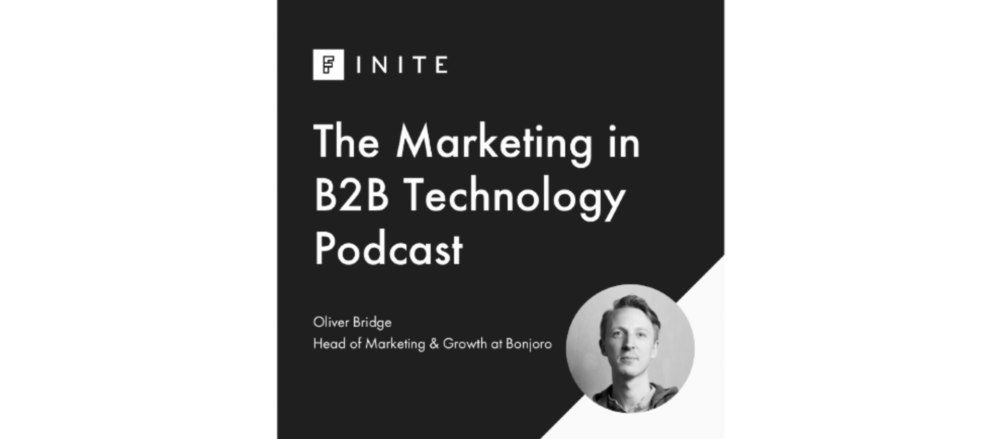
Oli Bridge is the Head of Marketing & Growth at Bonjoro, a platform that allows businesses to boost customer engagement with perfectly timed personal videos.
FINITE podcast host Alex Price sat down with Oli to explore his role as Head of Marketing and Growth at Bonjoro. The discussion focused on Oli’s innovative approach to growth, away from the ‘traditional’ inbound marketing method. Instead, Oli’s focus has been on customer advocacy and scaling what he calls a ‘word of mouth engine’.
This episode covers:
- About Oli, Bonjoro, and his role as Head of Marketing & Growth
- What is a word of mouth engine?
- How is a word of mouth engine run by a Customer Advocacy Officer?
- How teams can work together to support customer advocacy
- Customer advocacy supplementing other inbound methods
- Where to start in building a word of mouth engine
- How to build relationships with industry influencers
- Picking a review platform and asking for reviews
- The key to a word of mouth engine is personalisation
- The future of B2B tech companies throughout Covid-19
Listen to the full episode below:
And once you’re done listening, find more of our B2B marketing podcasts here!
Full Transcript:
Alex (00:07):
Hello everybody, and welcome back to another episode of the FINITE podcast. Today, I’m going to be sitting down with Oliver Bridge. Oli is the Head of Marketing and Growth at a really innovative, personalised video platform called Bonjoro.
And we’re going to be talking about a subject that I haven’t really explored before in much detail on the podcast. And that’s how you can build a really scalable word of mouth engine and really drive growth through existing customers rather than all the traditional inbound channels.
So I’m really looking forward to picking Oli’s brain about this subject, and I hope it gives you some really interesting and tangible, actionable insights that you can apply within your own businesses, so enjoy.
FINITE (00:49):
The FINITE community and podcast are kindly supported by 93x, the digital agency working exclusively with ambitious fast growth B2B technology companies visit 93x.agency to find out about how they partner with marketing team and B2B technology companies to drive digital growth.
Alex (01:10):
Hey Oli, thanks for joining me.
Oli (01:11):
Hi Alex. Good to chat.
Alex (01:14):
I’m looking forward to talking today and yeah, running through a bit of your insights around scaling and word of mouth. And I think it’s a really interesting subject that I know you’ve been putting into practice, but let’s start as we always do with a bit of background and intro to who you are, what you do and where you’re working.
Who is Oli and what is Bonjoro?
Oli (01:30):
Yeah. So I’m currently Head of Marketing and Growth at Bonjoro, and Bonjoro is a, I guess in simple terms, it’s a video email application. So you can send video emails via our web app or via a mobile app, iOS and Android.
We’re just launching a Chrome application on Monday, coming Monday. But sort of a bit more, you know, when you sort of peel it back, it’s actually more about, you can hook it up to your own CRM and what you can do by hooking it up to your CRM is you can create, I guess you could call them funnels.
So maybe you’ve got like an inbound inquiry that comes into your website, say you’re a photographer and you get an inbound inquiry. You can hook your CRM up to Bonjoro, you’ll get a notification to say you’ve got an inquiry, do you want to send them a personal video? To engage and build a bit of trust, creates a bit of a relationship.
So, yeah, it’s a bit deeper than that. So we hook up to lots of different CRMs. You can create what I call, I guess, like personalized video funnels to create engagement and trust with your audience and hopefully they convert more leads and get other benefits from that.
Alex (02:31):
Nice. Very cool. And tell me a bit about how you got into marketing. It’s always interesting to hear about the more traditional root in or have you come to marketing from a completely different direction?
Oli (02:41):
Yeah. So I swung out of marketing from sales actually. So yeah, my sort of early jobs were in like account management and sales. And then I joined, so Bonjoro is under a sort of bigger umbrella. We’ve got a parent company called Vimily and my first job under the sort of Vimily umbrella was for our sister company called Verbate.
So I was on the sales side of Verbate and actually Verbate is similar in many ways to Bonjoro. It’s a market research tool and all done through mobile video, to work with agencies and brands who come to Verbate and say, we want to find out what people in China think about alcohol. Can we do like a video diary? So that was actually like our original product. And I worked on sales on that side.
And funnily enough, I see Bonjoro was basically born from a hack we did for Verbate. So on the sales side, what we started doing, where we got an inbound inquiry, it was like, we sort of hacked together, record a video, put it in an email, send that email to someone. I think we were recording it and putting it on YouTube, putting it in an email, sending it through to them. And then they have to click through and we’re like, this is really crazy.
It’s really difficult to do, but it’s having an effect. People were getting back to us saying, Oh, thanks for taking the time to do it. It’s like four or five years ago. So when no one was doing this and we realised that we were getting lots more responses and it was working. So actually funnily enough, the company Verbate, it was an original, I guess that was the original hack of Bonjoro.
And we ended up building Bonjoro out into a full tool itself. So when we built Bonjoro, the founder Matt said, you know, you obviously like Bonjoro do you want to do more on it? I know you want to do a bit of marketing. Do you want to flip over into marketing on Bonjoro? So I did that. And so I flipped over into marketing and sort of three, four years later I’m sort of Head of Marketing here at Bonjoro. So yeah sales via a hack for a previous business and here I am.
Alex (04:34):
It’s surprising actually how many people I talk to. I think probably the last like three or four episodes I’ve done of this with marketers, have all come from a sales background to begin with. I think all of them, it makes them feel as though they’ve got a much better insight into what their friends over in sales are really looking for.
And it makes them, I guess, gives you a better awareness of the entire sales journey and customer journey. And you think about things with a bit more of a wider view of the landscape rather than purely from the angle of a marketer.
Oli (05:01):
Yeah, definitely. And I think as well there’s a little bit of a squeeze on sales, in some respects. You know, funnels are getting shorter, we’ve been moving more and more towards the slightly low touch model. Well, some businesses are, some businesses aren’t, you know. The mid market and enterprise aren’t, but there are more and more companies that are sort of focusing on that SMB market.
And when you do that, typically your pricing’s lower, your lifetime value is lower and actually you run more of an inbound funnel and yeah, the sort of low touch model doesn’t suit salespeople. So I guess it’s a bit opportunistic. Maybe I saw that happening, that trend and thought better get into marketing quickly.
Alex (05:38):
Fair enough. Well, let’s talk a bit about what we’re going to talk about today, which is in your own words, scaling a word of mouth engine. So I’m not going to go into detail. I’m going to hand straight over to you and let you give us a sense of what that means. I think it’s a really interesting and refreshing subject. It’s not one that we’ve really covered in the podcast so far. So yeah. Tell us what you’re thinking.
What is a word of mouth engine?
Oli (05:58):
Let me take a crack at it. So I guess the theory is, and it relates to what we were just talking about a little bit, with sort of funnels getting shorter. And I guess a lot of businesses can’t afford to do sales or won’t have big sales teams when they start up. So thinking sort of day one through your first year of business, trying to grow a business, it’s like, how do you do that in the most effective and cost effective way possible?
And also we know at the same time as that trend, there’s been like an explosion of competition in sort of inbound marketing funnels. So everybody knows how to spend money on Facebook Ads and Google and retargeting and there’s so much education, like everybody’s aware of the same tactics.
So when we launched Bonjoro and when I started up the marketing of Bonjoro, we sort of had a chat internally and we were like, okay, how do we do things a bit different? Because we don’t want to be stuck in this position of year one and two, we’re like chucking money at ads, and we’re trying to create loads of content for our blog and trying to get traffic that way. You know, SEO, all this stuff and everybody else is doing it.
So we thought, okay, our brand Bonjoro, is about creating connections and relationships with customers. So let’s try and create like a real, well structured word of mouth engine that is sort of founded on this whole feeling of delighting customers. Our brand was all about, we had quite a kooky brand from day one, you know, we’ve got these sort of bear illustrations if you go to our website and we stand out quite a bit for that.
So I was thinking, okay, how do we create a marketing engine and sort of tactic that really fits with who we are as a brand. So we settled on this sort of idea of customer delight and we thought, okay, let’s create a marketing engine that’s basically growth through customer delight. So from day one, we’re going to treasure every single signup and customer that comes through and make sure that we are, I guess, in a way it sounds a horrible word, but leveraging every customer as much as we can.
So how do we identify customers that can help us grow? Who are the ones that are gonna sort of feed into our word of mouth engine. Who’s going to become an advocate? And what we didn’t want this to be was like, it’s just customer success. Because actually I think there’s a space between sales and marketing and customer success, which is more about like advocacy and growth.
And there’s a job role there that isn’t a customer success job role. And we call it here, Customer Advocacy Officer or Customer Delights Officer and their job is to essentially sit there and create funnels and look for opportunities for growth through your own customers. So that’s, I guess the top level theory, it’s like thinking about word of mouth as an engine in itself from day one of your organisation and how do you actually create that?
Alex (08:48):
And so how does that work for you at Bonjoro? I mean, do you have the Customer Advocacy Officer role or is it owned by marketing? Is it owned by a combination? So I think that’s a really interesting title, but it’s not one that you come across too frequently I don’t think.
What is a Customer Advocacy Officer?
Oli (09:00):
Yeah. So it’s a separate role and it’s geared around and the KPIs for that role, let’s call it Customer Advocacy Officer or Word of Mouth Officer. The KPIs are geared around handing opportunities, either getting opportunities and taking them upon us themselves or handing opportunities back to marketing. So think of this, like things like reviews.
So reviews are the lifeblood of any business, very early on. So the Advocacy Officer, really their job is to find out which of our customers are going to give us reviews. How do I get a lot of them to either give those reviews or hand back to marketing to take advantage of that. So they’re almost doing either the whole thing or the identification and handing it back to marketing.
Then other things like podcasts, you know, when people are coming through, marketing at the top of the funnel, you bring in sign ups in this advocacy person is like, okay, these people have come in, let’s pick through our customers, figure out who the ones with influence in particular niches. Do they run a podcast? Do they have a good social following?
Again, hand that back to marketing and marketing can make that play and appear on that podcast or try and create a collaboration. So joint venture opportunities as well, webinars, all sorts of stuff like that. So really it’s about that handoff.
Alex (10:18):
Cool. And I guess the customer success, which I guess is kind of the account management side of a business like this, is also key in this, in that they have to stay close to their customers to begin with, to really identify when there is that initial opportunity.
So when the Customer Advocacy Officer, if that’s the role, is looking for an opportunity, I guess they’re going to have to be talking quite closely with customer success to try and work out where those opportunities can be found.
Oli (10:46):
Yeah, definitely that’s a good point actually. So we make a distinction between customer success and customer advocacy. And the key distinction we make is that customer success is about activating new customers and educating customers. And through educating them, it’s retaining them. And advocacy is about all this other stuff we’re talking about.
A lot of businesses I find put the advocacy onus on customer success. And the issue is that they’re so busy trying to activate and educate customers and retain them, and they’ve got lots of other different KPIs. What happens is that all of this other stuff sort of falls through the net. So I think you need to separate them out.
So over time, as you become a bigger organisation, your Advocacy Officer will actually have a team of people, it may be that you call them Community Managers, whatever it might be, who are there to tap into your community without having to be educating and really train them on the product. So I think you need to separate those two out.
Alex (11:46):
Interesting. And then in terms of, I guess, how product and customer success and advocacy, I mean, there’s so many roles within a technology business like this, that’s the scaling, and I’ve seen all kinds of models from account management and I guess marketing and product, sitting in pod things or sales and account management sitting next to each other, or I should say new business and account management sitting together, seeing that of every model out there.
How do you foresee different teams working side by side and partnering up to make sure that this is actually possible and happens?
How can teams work together to support customer advocacy?
Oli (12:21):
Yeah. So here, I’ve had to talk to a lot of people about this. So for me, I think sales should sit next to customer success. Because really, you know sales, that handoff is critical and that handoff happening properly and being really effective in activating new customers so that they’re actually using a product properly is really key. And then for me, then marketing should sit with customer advocacy.
It’s a funny one because you’re sort of moving marketing a little bit away from sales, but I think when you’ve got a lower touch model and you’re selling to SMBs for me, it makes a bit more sense, particularly when, for us, this makes sense, because we’re all about trying to create this word of mouth engine and create all these opportunities.
So marketing sitting with advocacy makes more sense. You know, in your business that might not make sense, but yeah, for me, sales and customer success should sit next to each other. Marketing and customer advocacy as well.
Alex (13:16):
Yeah. So I guess the differentiation is based on whether it’s more of a low touch SaaS model versus more enterprisey. Which I guess is always going to be a different kind of setup, but that’s how you segment the two different options.
Oli (13:29):
Yeah. And I think to be honest, you know, when it’s a much higher touch enterprisey business, the whole sort of word of mouth thing is probably be not as relevant because you’re not competing in that inbound world, so what we’re talking about here is like, if you’re in this inbound world, that’s become so noisy, how do you stand out and actually how do you get a lot of value for money? And getting value for money is really about taking advantage of your existing customers and making them your growth engine.
Alex (13:55):
And on that inbound front. I mean, you talk about this being the route that you followed at the early stages, but was that to say that you weren’t doing all the classic inbound stuff where you were just doing this all day? Or how is it supplementing the kind of customer advocacy stuff as well? And how do the two potentially work side by side?
How does customer advocacy supplement other inbound methods?
Oli (14:11):
Yeah, I think you can still do it. I guess to give an example. I don’t know, for me, a lot of the classic inbound stuff I prefer to think of as, I like to bolt on like things like the webinars and all of those sorts of things. I think the most important thing is to not drop the ball with any of your customers coming in.
So no matter what you’re doing to bring signups in, you know, retargeting webinars, creating like playbooks of how to use your product, that you then use in retargeting ads. For me, that’s more important than the super sort of cold ads you might create, or those blog posts that you’re really hoping are going to bring in great traffic and they never do.
It’s like if you’re getting customers coming in and you’ve got a word of mouth engine and those people are telling other people about you, really focus hard on the bottom of your funnel in terms of educating those leads.
So actually yeah, we’ve done some of the real top of funnel stuff, trying to hack traffic, but where we focus, most of our effort is how do we build an unbelievable experience for the people that actually do come in the door? And not drop the ball with them? So really, to be honest, I’ve geared like 80% of my marketing effort around that.
So that’s like creating webinars that we run once every two weeks or once a month for how to create these video funnels that you can do with our products. You know, that sort of stuff. So I think that’s more important. And we recently wrote, a couple of months ago, I published a playbook that I called the video funnel playbook. That was 35 pages long, how to use video in your business for everyone, from sales to customer success, to customer advocacy, all this stuff, and then putting a lot of effort and money and time into marketing that to our existing customers, but also using it in terms of retargeting efforts as well.
So if anybody comes in the door, let’s make sure that every single customer that ever signs up to Bonjoro sees and consumes that piece of content. So for me, that’s more important than having like a blog post that you’re hoping is going to bring in this traffic. It’s like if someone comes in the door, make sure they read and consume your most important piece of content. Don’t drop the ball on that one.
Alex (16:26):
Makes sense. And do you think that as a kind of growth engine, this is working for now and it’s going to take you so far, or do you think that it will always be kind of 80% geared towards this?
Or is there a point at which in your growth that actually, it makes sense to start investing more in all the more traditional stuff and obviously keep going with all of this, but supplement with the more traditional channels as well?
Oli (16:45):
Yeah. I think you keep this engine going because you want to keep your pedal to the floor in terms of like reviews and getting podcasts from customers that come in and sign up and get those joint venture opportunities and webinars. But yeah, I think over time we will need to do more and more top of funnel traffic stuff.
As an example, actually we have pivoted a little bit of our efforts. So we spent the first couple of years, pretty much every podcast we got on, came through people that signed up and identifying those opportunities. But more recently I brought in a new person into marketing and we realised podcasts for us was like a massive growth lever. We’re getting incredible signups coming through traffic sign ups.
And really, I guess, you know, you hear you’ve got a really captive audience and people listen to you and they trust you. I think podcasts are an amazing thing and they really deliver great quality signups. So we started to create lots more of a cold outreach around podcasts. So we’ve got a whole engine around that.
Like, we’ve got this big page in Notion, I don’t know if any of your audience use Notion, but basically a sort of docs and sheets thing. And in the last, I think in the last three, four months, we’ve reached out to 300, 400 different podcasts after reaching them and been on about 70.
So yeah, there is a point that comes where you think, okay, we take the things that are working. So your word of mouth engine, listen for those signals, which channels are working through that? And then can you take that and make it into a more growth hacking or traffic hacking thing as well?
Alex (18:17):
Cool. Sounds interesting. So we’ve talked about and explored some of the more theoretical side of what this looks like, and I guess started to touch on how you apply it, but let’s dive a bit deeper into some of the tactics that people can do.
So I guess to start with at a top level, what was square one? Like where did you start? How did you begin to kind of build this out for yourselves?
Where to start in building a word of mouth engine
Oli (18:39):
I think the first one is in the first six months of Bonjoro, the biggest thing we did was to look at every single sign up that came through and look at their sort of influence level. So rather than, what you could do as a marketer is go and sign up to an influencer marketing platform and spend all your days trying to figure out who you can get in touch with.
And everybody else is doing that. You’re sending them cold emails. You’re never getting any success and they’re probably ignoring you because they’re just inundated, so better to spend time on, okay, signups are coming in. What sort of level of influence do they have?
And quite early on, we had some interesting people come in. So, a guy at Convert Kit sent a video using Bonjoro to a guy called Pat Flynn and Pat Flynn of course, is quite famous in the States. He runs a podcast called Smart Passive Income. And, we noticed this and we got in touch with Pat and forged a relationship with him. We didn’t make an ask initially. We just made sure that we created a great relationship with Pat. And eventually that led to us being invited on Pat’s podcast and that had hundreds of thousands of listens and still gives us a long tail now.
So first sort of three to six months, I’d really say just like, it’s all about identification, make sure you know who your signups are or your customers, and try and engage with them. As it grows a little bit and that’s all done personally, we were sending personal videos, we’re a personal video company.
So we were sending personal videos to everyone to do this. But as that grows, what you could do with your marketing automation tool or platform is set up an automation, for example, where you know customers are having success with your product. So for us here at Bonjoro, it’s all about sending videos.
So we actually did this and after about six months, we set up an automation where anyone who sent 200 videos, an automated email went out from Matt, our founder saying, we see you’re having success with Bonjoro, hope you’re loving it, by the way, do you run a blog or podcast or webinar? We’d love to team up with you and speak to your audience and that sort of thing. So that’s a really simple automation you can set up.
So whatever it is for your business, that signal that someone is having success or could be an advocate, set up a really simple automation and just make that ask. We had loads of opportunities come back from that in the first sort of well from month six to month 12. And we keep that switched on today and we still get a constant drip of opportunities from that. So that’s one very simple tactic you can do today.
Alex (21:03):
Interesting. I like that. Yeah, that’s a nice, I think workflows and automation is so easy to get kind of really deep into so many different directions, but that’s a really nice, simple, straightforward one you can use. I’m interested in the influencer side of things. I think it’s not an area that is explored that much on the B2B side, obviously massive in terms of, you’d see, although I guess with the Coronavirus at the moment, most influencers are kind of stuck at home and can’t do much. So I’m not sure what’s happening to that space, but yeah.
Can you share a bit more about that one really interesting example? And I’ve kind of at irregular points been doing about research around B2B influencer marketing agencies. And I feel like it’s only a matter of time before there’s all the regular people that pop up on your LinkedIn and Twitter, that are a voice in the marketing world. Do you think that’s something that’s going to keep growing and rising?
How to get influencers on board
Oli (21:50):
Yeah, I do. And I think actually I could give your audience a bit of a hack here, a bit of a tip that I found about a year ago. So I’d signed up to a load of these influencer marketing platforms and really struggled to find one that delivered for B2B. They’re all very B2C focused.
So the hack I found, I was on Ahrefs one day. So if anybody hasn’t used ahrefs.com basically like a SEO keyword research tool. And I thought it struck me. It’s like, oh God, most of our influencers are affiliates. And in being affiliates, essentially whenever they share Bonjoro with their audience, they’re going to be back linking to us. And in that backlink is going to be buried, something like top affiliates or affiliate, like in that backlink.
So I went into Ahrefs and put in like a keyword for a competitor. So I put in a keyword, I put in ClickFunnels. So I was looking at clickfunnels.com and then it went into this little bit advanced search bit you can go into, and you can look within the backend for a particular word. So I put, I think I just put affiliate. And in doing that, I basically found ClickFunnels, all of their affiliates.
So if anybody listening, if you want to identify the influencers of other businesses in your space or competitors or whatever, or like, you know, parallel services go in to Ahrefs or any other sort of keyword research tool that you have, maybe Moz as well, I haven’t used Moz but I think it works. Put in that organisation, find their backlinks, and then see if you can filter through their backlinks for that sort of affiliate thing.
It might be like Tapfiliate or whatever they use for their affiliates. And you’ll basically bring back a list of all of their influencers without ever having to subscribe to an influencer marketing platform. So that’s one little hack that you can use.
Alex (23:33):
I like that. That’s a great tip. I think I’m going to have a look into that later.
Oli (23:36):
When you do the reaching out, I AB tested this, I did personal reach-outs to people. And then I did like a list reach out where I hadn’t personalised it as much. The non-personalised one, I got some really snarky responses actually basically saying, yeah, I dunno. They were just like, okay, you could spend a little bit of time, you know, like basically if you just want to make money off me, you recognise that I’m an affiliate for someone else.
So really hyper personalise it, like spend the time on that. I think that’s happening across sales and marketing anyway, now people know that, but yeah, don’t do the sort of bulk outreach stuff
Alex (24:09):
Definitely good tip. And in terms of customer overuse, are there particular platforms, I know that for myself and my business, that when we get to the end of a project, we’re like, okay, we want a review. Clients are happy to give one but it’s like Google Reviews probably get seen the most, good for SEO potentially. Although it’s a bit of a, you know, one of those metrics, no one’s really properly identified yet.
There’s all the other big review platforms, there’s then specialist review platforms within our industry that keep an eye on, you know, you’ve probably only got one, maybe two shots to ask the client for a review somewhere. And you’ve got to pick where you put it. What’s your view on that?
Picking a review platform and asking for reviews
Oli (24:44):
It’s interesting that, pick where you put it. Yeah, it’s good. I look at this and we shift it around a lot here, but my view on that is, make the ask really personal. And I’m sorta going to plug our own product here. But in this video funnel playbook thing that I wrote for Bonjoro, one of the funnels was getting reviews from customers.
And actually we didn’t invent this, our customers started doing it with our product and we just learned about it through them. So what they were doing, they were doing stuff like say, if a customer left them an NPS score, they would trigger a Bonjoro task in our app, to send that person then a personalised video, asking them to leave a review.
So rather than just setting up an automation that asks, and I’ve had loads, we’ve all had those where that automated email goes out saying, oh could you leave us a review? And you know it’s been triggered by something. Instead of doing that, do it personally. So use Bonjoro or whatever video tool you want to use, make a personal ask. And the number of people leaving a review for you will shoot up dramatically.
So we had, there’s a customer, an eCommerce customer that uses Bonjoro called Munk Store. They’re like an eCommerce retailer in Denmark. They started using Bonjoro, and this was like 2018 or something. But then two months it got onto number one in Trustpilot, in the whole of Denmark for men’s fashion because they’ve taken their review rate and basically tripled it like in two weeks.
Because people just couldn’t believe they’d send them a personal video to, I think they were what they were actually doing was sending, I think they were sending a video basically saying thank you for your order, showing them the product and then setting out and then sort of making the personal review ask it, like a few days later. So yeah. Make it personal. I think that’s one thing.
So it could be like something like an NPS survey is perfect because you’re teasing out who are the customers who are really loving you. And then you could, if someone leaves you an eight, nine or a 10, then you could send that personalised video ask. And then a second way, another way is any organisation that doesn’t have a private community I’d recommend definitely having one.
So we have a Facebook community and we’ve got about 500 of our tightest customers who really love Bonjoro, and want to sort of mingle. Once you build that community and you have it going, you can then just put posts in there and say, look, we’re on a bit of a review drive. And those people are your biggest advocates, really. They’re going to give you those reviews. So yeah, having a community I think is key as well to that.
Alex (27:07):
Yeah. I think the big takeaway there and through all of this is personalisation is really key and that yeah, you can try and do all this at scale and without being personal but actually it’s probably not going to be as effective. And I guess it’s just finding that balance between how much time you put into personalisation.
It sounds like that Danish retailer was putting a fair bit of time into doing that for each customer, thanking them for the product, then asking for the review, but it’s no doubt pay dividends for them in the longer term. I guess we need to get to the point where people can use deep fakes to edit video and do like at scale personalised.
It would be amazing if you could adapt people’s mouth and enter in the company name and person’s name and it just, you record the video once. I guess it would be also quite a scary point when we get to that stage, but probably not that far away weirdly.
The key is personalisation
Oli (27:53):
No, it’s interesting. You touched on that like, our whole point of difference here at Bonjoro, what we’re trying to do with video isn’t, there’s lots of people out there like creating screen recorders and all this sort of stuff. And other personal video stuff has come onto the market since we’ve been around. Our big driver is giving you the context you need in front of you as you record.
Well, it’s one of the triggers, so integrating with the CRM, it’s marketing automation so you’re recording videos at the perfect moment to get the best result. And the second part is how do we give you the context you need to actually make the ask personalised. So we’ve got this thing called customer context. So you can basically pull in parts of your CRM. So customer attributes from your CRM. And they’re right there when you’re recording your video.
I think that’s one of the issues in terms of a workflow, when people try and do stuff personalised, you’re constantly having to reference a spreadsheet or go back to your CRM and it just takes ages. So I think, like you say, how do you scale this personalisation thing?
It’s about companies like ours and others solving these little workflow issues, but yeah, personalised works so much better. And so Casey, who’s our Growth Manager here, he’s the guy that reaches out to lots of podcasts. Everything he does is one-to-one, you know, he tried in the early days doing more bulk stuff and it just doesn’t work anymore at all.
Alex (29:13):
People see through it, particularly when you’re targeting people in the, I guess kind of broadly in the marketing space. I think we’re more aware of when we get emails and any kind of comms that isn’t personal, it just kind of stands out like a sore thumb.
Oli (29:26):
I think the general consumer is moving that way as well aren’t they? They’re getting savvy to this stuff as well.
Alex (29:32):
Yeah, for sure. There’s some really nice tips there. I think that’s some really interesting stuff and food for thought for myself as well. And I need to give Bonjoro a play and use it myself at some point. So I’ll speak to you about that afterwards.
I guess it would be wrong of us not to at least touch on the Coronavirus climate seeing as we’re in what, week two or week one of proper lockdown. But I guess it would be interesting to get your sense of how it’s impacting what you do, I guess, to some extent your product in itself is potentially more valuable than ever and in terms of personalised and personal feeling communications.
But from your perspective as a marketer, you know, in terms of budgets and how you’re looking at the next few months, is it kind of proceeding with caution? Is it kind of business as usual? Have you seen an uptick in people who are looking at the product because of what’s happening at the moment? Yeah. What’s your view of things currently?
The future of B2B tech companies throughout Covid-19
Oli (30:22):
Yeah, well, it’s interesting cause it ties in, so we have this sort of overarching purpose as an organisation, and it’s empowering every business to build real and lasting relationships with their customers no matter where they live or work. So that’s like our guiding purpose mission statement, if you will. And it sort of seems more relevant than ever right now, the sort of last bit, no matter where they live or work. And I know that’s true for lots of other businesses like Zoom, et cetera, who have had these sort of big influxes of traffic.
For us, we have seen more traffic coming through. We are definitely seeing more customers, you know, as people feel a bit more cut off from others, they need tools to help them connect better. It’s funny actually, I was thinking as a bit of an aside, I was thinking about the Zoom last night and I was thinking, it’s been great for Zoom, but then it struck me that actually it’s probably been terrible for Zoom, because they’re suddenly supporting an entire funnel of signups that is in no way primed to actually go on and pay for their product. This isn’t the type of signup they need.
So as a marketer I was thinking actually that’s going to be a problem for them, how they support that ecosystem. But for us, I wouldn’t say it’d be an opportunity because I don’t like to see this as opportunistic. Just naturally, there has been more, more people interested in what we do, probably going to increase on Monday actually, we’re launching a new Chrome recorder as well. So screen and web cam recorder to help our customers do video in more places as well and share video in more places.
And for us, that’s a bit of a play on, you know, right now Bonjoro is all about how do you engage and activate and convert customers and build trust in your funnels. The recorder will give us an extra option, which is how do you then educate those customers? So they stick around a long time.
So what we’re imagining is that customer success, people that are our customers will be able to record videos. And use these videos in a personal way, at very specific moments in the funnel. So rather than just having like a one size fits all educational video, actually they’ll be able to create a screen recording that they can push out to a particular customer at a very specific moment created by a trigger in their automation system.
So we’re trying to make that whole education piece more personal as well. But yeah, I don’t know. I really don’t know whether people will suddenly revert to type. It’s weird, like the general consumer, I had a chat, my dad’s birthday yesterday and for the first time ever, like the whole of our family got on a group Zoom call.
So driving that it’s definitely driven tech adoption. And I think it will have a big impact on this, because when I’ve had conversations with family members before about Bonjoro, they’re like, okay, I sorta get it. Don’t really get why I’d need it. And maybe people will get why they need this stuff now.
Alex (33:03):
Yeah. I think it’s one of those things that until, I feel like it’s getting people past that first tipping point of using it for the first time and seeing some results. And as soon as they’re past that point, they completely get it, but it’s a completely new way of thinking. And like I said, it feels like you’re opening yourself up a bit more.
You’re making yourself a bit more vulnerable to somebody saying like, there’s a lot of really interesting, I think psychological elements of using a product like this, but once people are willing to accept that, yeah it might not please everyone. And some people might think it’s a bit weird, but you’re better off with a few people loving you than trying to please everyone. It’s a really powerful personalised way of doing outreach or all kinds of other kind of marketing.
Oli (33:40):
Yeah. We’ve been on that inflection point for a little while, I think in terms of people being a bit worried about putting themselves out there and weirdly it’s, I think it’s funny that we’re seeing Tik Tok suddenly in this last couple of weeks during Coronavirus has been adopted by loads and loads of like people who typically wouldn’t have adopted it. It’s gone up the scale hasn’t it like 30, 40, 50 year olds and beyond, and people are dropping their guard. I think they’re learning to drop the guard. And I think that might continue.
I think some big businesses might try and revert to type again, like I really worry that some of these benefits, like particularly people that have families at home, like children where they’re not having to commute, they can spend more time. They can maybe read a bedtime story, all this stuff. I think everybody should be able to do that.
And I, not deeply despise, but I think companies that haven’t given flexibility to employees up until now, I really hope that those employees have a bit of weight behind them or collateral to say actually, look, we’ve got to do this now you know. We did it and we could carry on working and everything was fine it didn’t fall apart. Hopefully it won’t fall apart. So I really hope people that have had jobs that haven’t been great at giving them that sort of flexibility where it’s needed for their own mental health and wellbeing. I really hope that that changes from this.
Alex (35:01):
Agreed. Yeah. And to wrap up, looking ahead and hopefully we’re in the not too distant future out the other side of what’s happening right now, but within the world of B2B marketing and I guess, trends or things that you’re looking at, things you want to explore or test over the next year or so?
Oli (35:18):
It’s hard to pick. I think we’re slightly drifting away from content marketing as the be all and end all, but I don’t know what the next thing is going to be. Like, it’s still, there’s still lots of different things that are putting their hand up, like what we’re doing, like personalised video and ultra sort of personalisation and connectivity with your customers. But I don’t know which is going to win out. Like who’s going to be the next HubSpot.
What is that inbound marketing thing going to be, I don’t think it’s obvious yet. I do wonder whether 5G will play a bit of a part in that. I think one of the issues with tools like ours in the last sort of five years is still that we don’t have that sort of rapid connectivity. That means you can open a video as quickly as you can open a text based email. And if that changes, suddenly things in B2B might change a little bit and video might become more prominent. So we’ll see, I haven’t got a good answer to that.
Alex (36:12):
I think that’s a good observation. I think that in three months time, a few months time, however long it takes, when we’re out the other side of this and people’s ways of working change and I guess we’d be working, if we built more personal connections naturally. I mean, I, for one have seen the inside of God knows how many people’s living rooms or bedrooms in the last week alone. Plus 5G I think a lot of things have come together where we’re in a very different world in a year from now.
So yeah, I think there are good things to be keeping an eye on, but yeah, it’s been great to chat Oli. I think there’s some really interesting stuff in there and some really actionable, nice bits that actually have a pretty low barrier to entry, in that there’s almost no excuse for not doing to some extent, the more I think about them. Yeah.
I think so many, as you say so many businesses are focused on the traditional acquisition channels and driving stuff into the top of the funnel, but actually not necessarily thinking about the bigger picture. So yeah. Massive, thank you for your time. I appreciate you sharing all of those, those insights and I hope you say safe and well in the current climate.
Oli (37:13):
Thanks very much. Yeah. I just hope it’s useful for a lot of the businesses who are in that early stage thinking what is the first thing that I can do? How can I create growth from day one? Because often it’s a bit of a scary time and that sort of focus on word of mouth and creating advocates I think is a good a place to start as any.
Alex (37:30):
Yeah, cool. Thanks Oli.
Oli (37:31):
Thanks Alex.
FINITE (37:35):
Thanks for listening. We’re super busy at FINITE, building the best community possible for marketers working in the B2B technology sector to connect, share, and learn along with our podcast. We host a series of events here in London, so make sure you head to finite.community to subscribe and keep up to date with upcoming events.