- Some additional information in one line
- Dec 2 2019
Podcast: Content Marketing: Quality vs Quantity with John Enny, Director of Marketing at xtraCHEF
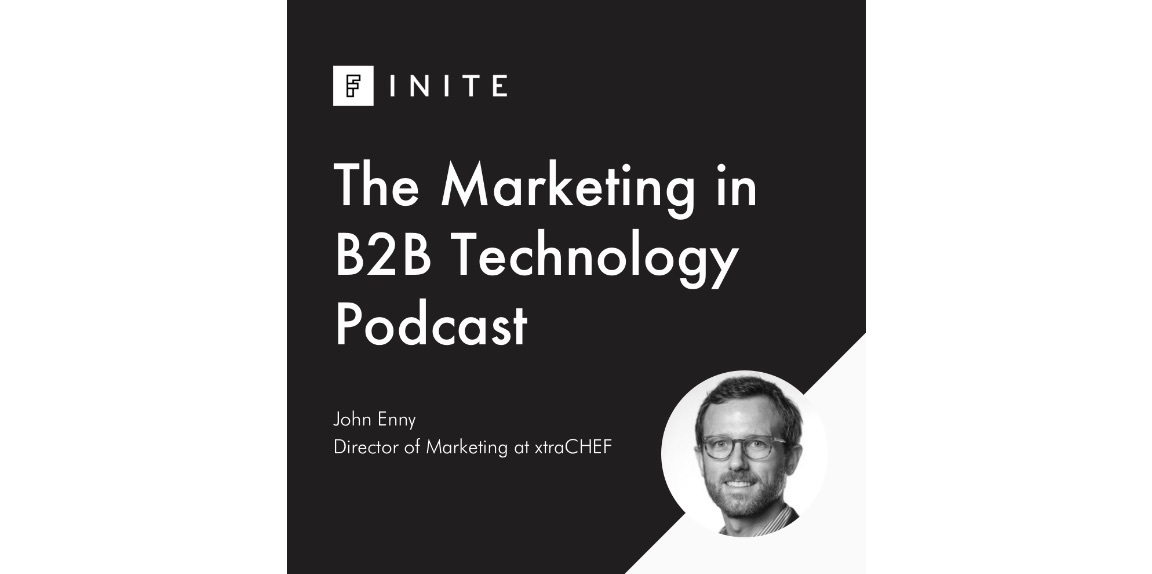
John Enny is Director of Marketing at SaaS restaurant management platform xtraCHEF, which helps restaurants improve productivity and increase profits.
Our host Alex Price sat down with John on a recent visit to New York to explore his day to day running marketing at xtraCHEF, and to try and answer some big questions around content marketing. Specifically, how can marketers walk that fine line between quantity and quality when it comes to content marketing?
This episode covers:
- John’s background in marketing and the value of his business degree
- The marketing operation of xtraCHEF
- Content marketing strategy at xtraCHEF
- Keeping a consistent tone of voice across content
- Segmenting customers for content strategy
- Using SEO as a long term strategy
- Benchmarking quality to reach quantity
- An approach to budgeting content strategy and using automation to attribute ROI
- Future technology that will solve quantity vs. quality
Listen to the full podcast here:
And once you’re done listening, find more of our B2B marketing podcasts here!
Full Transcript
Alex (00:07):
Hello everybody, and welcome back to the FINITE podcast. I’m actually recording this in New York where I’ve spent the last week or so. I’ve been out here for work and trying to set up a few episodes of the FINITE podcast to record.
And today I’m lucky enough to be sitting down with John Enny, who’s the Director of Marketing at xtraCHEF, which is a SaaS based product for the restaurant industry that helps restaurants take control of their food costs, managing everything from invoicing to order management, food cost intelligence, really interesting dynamic products for the food and restaurant sector.
And John and I are going to be sitting down and talking about content. Content is king, it still is king, it fuels the B2B marketing world, as I’m sure everybody knows. And we’re going to be trying to answer the question quality versus quantity. It’s a really interesting subject.
I think everybody struggles with finding that balance between how much content they publish versus having processes that allow content to be published whilst meeting a certain level of quality. So I’m super looking forward to sitting down with John and exploring that in more detail, I hope you enjoy.
FINITE (01:09):
The FINITE community and podcast are kindly supported by 93x, the digital agency working exclusively with ambitious fast growth B2B technology companies visit 93x.agency to find out about how they partner with marketing team and B2B technology companies to drive digital growth.
Alex (01:30):
Hey John, thanks for joining me.
John (01:32):
Thanks for having me, pleasure to be here.
Alex (01:34):
I’m looking forward to talking with you. I think we’ve got, this is a topic that we’re gonna be talking about around content marketing that has come up, but we haven’t done a podcast episode on yet. So it’s one that I’m looking forward to digging into a bit more.
Why don’t you begin by telling me a bit about yourself and your background and what you’ve done today in terms of the world of marketing?
John’s background in marketing and the value of his business degree
John (01:52):
Sure. So I studied marketing in university, which I think a lot of marketers come to marketing in a lot of different ways. Not always by specialising that in the university, but I studied marketing, got a business degree and then sort of came into where I am today in a very circuitous path. After graduating, I did some volunteer work. I kind of got on the, save the world kick and spent some time overseas, did some volunteer work.
As I mentioned, I did some nonprofit work and eventually found myself working as a contractor to the state of Maryland here in the US for a public transit project. And so we were doing community outreach, a $2 billion project. And, we decided to use Salesforce as a way to capture public comment. And I’ve raised my hand and said, you know, this is something that I’m interested in learning more about, which is sort of what pulled me back into the business world.
And so I spent a couple of years doing that and then started a family and was looking for my next opportunity when a good friend of mine, who I grew up with Andy, who happens to be the CEO co-founder of xtraCHEF, the company I work for now, asked me to come join his previous company. It was actually run by his father. And what we were doing there is we were a value added reseller of enterprise content management technology.
So we were applying some of the same technologies that we’re applying today at xtraCHEF, but at the enterprise level, fortune 1000 companies, local governments, retailers, big box retailers. And so about 2016 is when I finally made the jump to xtraCHEF. Andy had started xtraCHEF in actually 2016 and then I joined in 2017.
So a bit of a circuitous path as I mentioned, but one of the things that I felt like I was missing as a marketer while working at my previous company was we’re using technology to solve a lot of different problems. And it’s difficult to be a solution for everyone’s problems and try to sort of fit your solution into, in one sense, a mortgage company and in another, a local government. And so as a marketer, it’s nice to now be at a company like xtraCHEF, where we’re very focused on solving a niche, being the restaurant food service operators.
Alex (04:11):
Awesome. I’ve got to ask you, how do you think the marketing business degree and stuff, do you think that set you up well for what you’re doing now? Cause I think that’s a debate we have a lot in the UK, at least around marketing education generally. As you say, so many people come to it from so many different angles. There’s a lot of like, we’ve got the Chartered Institute of Marketing, we’ve got all these bodies and membership organisations that do everything from like one day courses through to diplomas and master’s degrees like what’s your take on the education scene?
John (04:39):
Well, yeah, that’s a good point. I mean, when you think about what’s changed in the world in the last 15 years, which is how long I’ve been out of college, you know, it’s a lot, especially in the world of marketing. Digital marketing was sort of hardly a thing back then and now, you know, it’s such a thing. And so I really valued the experience that I had at university.
I studied with a lot of successful business people, entrepreneurs, many of whom came to here to New York, went down to work on Wall Street. And I sort of took the path less traveled and lived in Peru for a year. But you know, so, but to your point, I would say that, you know, I don’t have a good feel for what’s being taught in university today as it relates to marketing, but I assume that’s much different than what it was.
Alex (05:31):
It’s a tricky one, cause there’s arguably pillars of marketing relating to brand and all these things, which are maybe fundamental and maybe you shouldn’t change. If you read a book on brand from 50 years ago, it’s probably going to carry weight now. Right. But obviously, yeah, exactly. But the components of strong SEO strategy these days, like by the time you’ve written the course material on that, probably out of date, right? For them by the time you’ve got it published…
John (05:55):
You’ve got to refresh that content.
Alex (05:55):
Exactly. Yeah. So tell us a bit more about xtraCHEF and how it works and what it does.
John (06:02):
Yeah, sure. So xtraCHEF is a back of house restaurant management platform. And you know, one of the ways that I like to think about it is we’re sort of like mint.com for a restaurant operator. So what we’re aiming to do is provide data and empower restaurant operators to make more informed decisions around their finances, which tends to be a real challenge for restaurant operators, especially I’m sure the same is true in the UK, but here in the States, which is where we are currently focused, there’s a broad range of sophistication.
When it comes to businesses in the restaurant space, you have anywhere from your single unit owner operator who uncle Joe does the books, or maybe the owner operator does the books themselves, or they outsource it to an accountant to national chains, very sophisticated financial departments, CFOs, controllers. And so that presents its own challenges as a marketer, since we do have a solution that meets the full spectrum of the industry.
But going back to the challenge, chefs, restaurants are placing orders on a daily basis, purchasing ingredients whose prices are changing and fluctuating regularly. And so in order to actually know what your cost of goods sold are and how your costs are trending over time, you need that data. And so you either have to capture that data.
Oftentimes it’s coming into your restaurant on a paper invoice and that’s really how xtraCHEF got started with roots in what we were doing at MTS software solutions, where we’re doing AP automation. We were doing invoice processing using technologies like OCR, optical character recognition. And so what we did was we applied that very specifically to the challenges that exist in a restaurant.
Alex (07:51):
And so day to day, what’s the kind of marketing function look like? Where do you spend most of your time? Give us a bit of a picture of the marketing operation.
The marketing operation of xtraCHEF
John (08:00):
Yeah. So, you know, right before you got here, I was meeting with the leads of our business development and sales teams. So a lot of my day to day is sort of making sure that we’re aligned and,
Alex (08:13):
Which is much easier said than done.
John (08:15):
Absolutely. Especially when you have distributed teams, business development sales, we have primarily here in New York with a couple of people spread out around the country. As I mentioned to you earlier, as we were preparing, I live in Maryland and I have members of the marketing team in Philadelphia where we also have offices.
And so, there’s a lot of Slack, you know, a lot of email and depending on what’s going on campaign wise sort of dictates where we’re spending our energy. And then also trying to find the time to get together, zoom out, try to kind of get a look at the big picture, perform some analysis and then chart a course forward.
Alex (08:55):
Yeah. It’s tough moving between the top level, big picture and the detail of the work, right?
John (08:59):
Yeah. I mean, it’s very easy, at least here, I would say speaking on my own behalf, it can be very easy to get into the weeds. And especially when you’re a startup you’re growing fast, you’ve got a lot of decisions to make and you’re trying to add people and, you know, take off some of your hats.
So to speak that you’ve been wearing since the beginning, it’s easy to get kind of pulled back into that, but I think it’s a disservice to your own success when you kind of get pulled into the weeds versus being a little bit more strategic and being able to kind of see and move pieces around more strategically.
Alex (09:32):
Makes sense. Let’s talk about content. This is what we’re here to talk about is content. I mean, anyone in B2B, anyone in marketing I think is going to accept that content is king probably, as the saying goes. I think B2B marketing in particular where I think most B2B marketers are dealing with pretty lengthy considered complex buyer journeys that take a lot of time and are often quite educational.
And often particularly if you’re almost creating like a new category, then you just need so much content to tick off, like all of the decision makers that might be looking at what you do. But the challenge is like quantity versus quality. Right? And is it enough to just think some people will have the view that you should just churn out as much as you can. And some of it will probably stick, will do what you want it to do. Others will take a much more considered approach to balancing that out, but before we dive properly into it, why don’t you tell us a bit about how content works for you at xtraCHEF and all the different types of things you do that fall under the content marketing umbrella?
Content marketing strategy at xtraCHEF
John (10:30):
Sure. Yeah. And it’s something that we’re always trying to get better at. And so we’re spending more and more time focused on that, which I, one of the reasons I thought it would be a good topic for us to discuss today. You know, I would say that we’re just sort of embarking on an initiative to really be thoughtful and planned on sort of what the content pipeline looks like.
But it’s something that we’ve been working at since I’ve kind of come aboard because we essentially did create a new category in our space where AP automation, invoice, processing, wasn’t really a thing. And so now we sort of have to educate our audience and create content that makes it easy to understand. And like I said before from the owner operator who works with a handful of vendors to a CFO, who’s got a team of AP managers and clerks, you know, how does it impact their business and why is it something that is valuable?
And so, you know, today where we’re kind of getting now to the point where we can project out, okay, here are the campaign themes that we’re looking to create content to support. Here are the keywords that we’re looking to rank for. And here’s where we stand in relation to our competitors. And now who’s going to write it. And so that always is a challenging part of it, especially if you’re working with freelancers or contract writers who may or may not have accounting experience or restaurant experience.
Alex (11:59):
Yeah. I think that’s the big challenge, particularly the more technical products and solutions where, how much industry sector knowledge does it actually take for you to be able to produce arguably a relatively simple blog post. Like scaling content production off the back of that is quite tricky, but what do you think? I mean, either now, and then looking ahead, like what’s the plan, do you think you’ll invest more in internal content writers? Have you got specialists, contractors or agencies that you work with?
John (12:25):
Yeah, so I think as we grow and as we scale, we’ll need to bring more of our own writers and then our own content creators, because it’s not just writing in house. Currently we work with a number of contractors and, you know, I know we’ll kind of talk more about the balance of quantity versus quality, but someone who is to my own detriment, a bit of a perfectionist, you know, I never really want to say the same thing that maybe somebody else has already said, even though there’s probably value in that.
I kinda like to pick the spots sort of in between the lines, which can be a challenge because you have somebody who writes something that is just kind of getting the job done. And then it ends up taking me a little bit longer than I would prefer to kind of go through, edit it and make sure that we’re taking our own stance and we’re adding a little bit of thought leadership, something that makes us unique.
Keeping a consistent tone of voice across content
Alex (13:20):
Yeah, of course. Do you think there’s a, like, do you think about tone of voice and that kind of level of consistency? Cause I can imagine that working with a few different contractors, do they have some kind of parameters to work within on that front, or do you end up having to do it yourself and rejigging at it once they’ve sent something across?
John (13:38):
We provide guidance, but every writer’s going to have their own voice and we’re also trying to build a brand. And so we want to make sure that the tone of the content that we’re putting out there is consistent with the image and the brand that we’re trying to project and make unique.
And so there is a fair amount of work on the back end to move some things around, change a few things here and there to make sure that not necessarily consistent across each post, but at least within a framework of like, okay, we’re comfortable and confident in this being our message and how it’s being delivered.
Alex (14:13):
Okay. You mentioned segmentation in some of the notes before we started talking. I guess at the start we said that like, you’ve got a product that’s super niche and that you’ve got one industry sector, you’re just targeting restaurants. But then actually when we dig into it, you’ve got the owner operator through to the national chain and completely different buyer journeys.
I imagine you have to take those types of customers on, some of which might be quite short and sweet on boarding, some might take months, even years I imagine. How does that play into content and segmentation? Do you do either now, or are you planning on kind of breaking down content so that you’re really talking to specific personas almost within those different types of restaurants?
Segmenting customers for content strategy
John (14:52):
Yeah, we are. And as our company grows and as our product evolves, we’re breaking out of that category of AP management, AP automation, restaurant AP automation that I mentioned and getting more into operational features. And so our target persona and our buyer then changes and our competitors then change and the content that we need to create then changes and the segment that was the sweet spot, no longer becomes the sweet spot because of the marketplace and what potential competitors we’d be running up against.
And so, yeah, I would say to answer your question, absolutely. We want to be very segmented. We want to be targeted on in our content as it relates to both segment and persona, whether that’s somebody who’s a financial decision maker versus more of an operational decision maker, a culinary decision maker, what’s going to be important to them. And the content that they’re looking for and looking to consume is going to be, it’s going to be different.
Alex (15:56):
Yeah. That makes sense. I think an interesting area to explore if we keep coming back to the question of like quality versus quantity, is probably the context of the content, why it’s being published? Whether it’s about just top of funnel acquisition almost, and just getting people to your site and then I can figure out the rest afterwards. Or is it a super high value piece of content that’s really there to run a campaign off the back of, that’s purely like conversion focused?
I guess to answer the question of quality vs quantity, I think every company is going to be different, right? There’s no one answer fits all, I guess. But how much would you think it’s about like stage in buyer journey and is it about targeting? I guess, how do you split between, you know, when you’re, when you’re choosing what comes to publish, how do you choose which stage of the journey you’re almost targeting in terms of that funnel?
John (16:50):
Yeah, I think it depends on stage of the buyer journey. I think it also sort of depends on the trajectory and the stage of your company. And it also might depend on, on the product. And so I was speaking with a fellow marketer a couple of months ago and his comment was, you know, the role of the marketer is to just make sales look good. And, and so that’s sort of been what has driven our approach and strategy to date around content is just like having something that can support the sales process.
You know, having customer case studies that we can reference, but now as our goals get bigger and like I said, our product evolves, we need to kind of drive more traffic, drive more top of funnel, but we also need something that’s going to kind of push folks along the funnel through the pipeline and demonstrate our differentiators and our leadership and earn their trust to decide to do business with us. And so, yeah, I mean, you need it all, right? And so, that’s the perennial problem for us and I’m sure for a lot of companies.
Alex (18:00):
So does that mean that basic quantity is the issue, right? Or obviously there’s always the edge of quality that has to be maintained, but on that basis, you could argue that, you need to be less of a perfectionist and you need to accept that stuff has to get out the door. And if it’s bringing in traffic through SEO in the long term then is that like, are you achieving what you need to achieve and scaling marketing as you need to.
SEO as a long term strategy
John (18:26):
Well, yeah. And I mean, you mentioned long term, I think there’s a time continuum parameter of what that return is. And I think to answer your question, yes, I need to be less of a perfectionist and just put it out there. The gentleman who I worked with, who to create our logo, I don’t know if you have an image of the logo on the site or people check it out, but in any case, his name is Ben Warn I’ll give him a shout out. And he had gone through Seth Godin’s altMBA, are you familiar with them? And so he shared with me his thesis and it was published over perfect.
And so I’m always kind of trying to keep that in mind, because sometimes, you know, you’ll hesitate on pushing that publish button because, you know, there’s something else you want to add or you want to tweak, but often it’s published more important than perfect. But I kind of, I lost my train of thought because you had asked me prior to that.
Alex (19:17):
Where were we? I think we were talking about scaling the buyer journey.
John (19:20):
Yeah. Well, I guess, you know is quantity the issue? And I think it is, but I also think you need to keep people’s attention and give them a reason to come back, if you manage to get them to your site. And if it is just like, you know, whether it’s click baity or if it’s just like very SEO, technically written, and it’s not something that’s engaging and compelling, then you might not be able to move the needle. And I guess what I started to talk about was the time continuum in the short term versus long term, you know, SEO being sort of more of a long term strategy, but when you’re in a high growth company, you want to move the needle yesterday.
And so it can be difficult to justify, like putting something out that is purely just keyword focused, unless it’s going to be like, we’re going to see those immediate impacts versus maybe a more established brand might have a little bit
more leeway in having a bit of a longer term timeline horizon to think about the content needs and requirements.
Alex (20:31):
It makes sense. We were talking before we started about the HubSpot post that I mentioned that how to type, is it hard to type a shrug emoji? Is apparently the most high traffic article on the whole of the HubSpot blog, which is huge in itself. I forget how big, but I think millions of uniques a month. There’s definitely obviously a question around relevance there. And I’d love to know maybe I’ll try and reach out to someone from HubSpot and figure out how many people have actually converted off the back of that blog post and whether they can really attribute like marketing sales revenue success off the back of it.
But it’s obviously giving them some kind of brand awareness. I don’t know whether they established that, maybe marketing people need to shrug a lot. I’m not sure, but I don’t know what the science was behind deciding to write that post, but there’s obviously a big question mark around relevance of content. And as you say, like churning something out that will bring in traffic, but how much of that traffic is actually valuable to HubSpot?
John (21:24):
Right, yeah. I mean, I’m sure there’s logic there, and one thing that I think about is the way that people work and if you can kind of take the time to zoom out and apply some creativity to, how are marketers working today? And a lot of them are using Slack, you know? And so the only reason I’m so familiar with the shrug emoji, I mean, obviously it’s on social media all the time, but we use it all the time here in Slack and it’s like, you know, somebody else used it, I’d like to use that, well how do I type it? And then it’s like, now I’m on the HubSpot blog and I’m going to click around or they’re going to triangulate my email address and send me an email.
I mentioned an example that I had heard on a podcast recently with this gentleman who had spent some time in HubSpot, and had created the email generator or email signature generator, I should say. You know, you punch in a couple of your attributes, first name, last name, phone number, email address, boom. They got your email address, you know, like what do marketers need? What do people, how do people work? What do they need and how can we be the source of that information or that content for them?
You know, that’s the challenge I would put out there for marketers is like, how do you sort of see between the lines and sort of the way that your target market operates on a daily basis and how can you serve them up content that’s compelling to them? Whether or not it’s necessarily related to your business and then follow that up with more content that is more related to their business.
Alex (23:10):
So you could almost argue that at the top of the funnel, relevance isn’t that important, but as you work your way down, getting your brand awareness, building brand awareness can come through any means almost, even through unrelated content, but then there’s opportunities from there. I mean, do you think there’s ways of actually measuring?
Thinking slightly philosophically, to answer the question of quality versus quantity, you almost need to have definitions of both to then answer the question to some extent. And it’s like, can you measure quality? Are there things that you can say? Could you create a process that every blog you got back from one of your contractors or writers that produces content for you? It’s almost like a yes or no one or zero. Does this meet our quality standards? And if it is above that threshold, even though it might not be perfect, let’s turn on the tap and produce more of that.
So you’re kind of, you’re just almost setting expectations across the business of what a piece of content meeting a certain quality level looks like. And there’s some benchmark that you can do to compare, and anything beyond that is acceptable, and let’s go for quantity above that.
Benchmarking quality to reach quantity
John (24:14):
I feel like I’ve learned something. I think you’re onto something there, absolutely. Because quality inherently is qualitative, you know? And so without having that documented, what that benchmark is for your company and making sure everyone’s clear on it and what the criteria are.
Alex (24:33):
Yeah. It’s definitely tough. Right? Cause it’s, to some extent it’s like a piece of design, people are always going to have some subjectivity about it. You know, we design websites a lot, we know that we can get something signed off with a marketer, but then it goes to the CEO and he’s got a completely different view. And it’s the same with a piece of content I think it’s, some people might perceive it as really ticking all the boxes, and others might just not like it or the tone of voice isn’t quite right. Or they felt like it’s missed something key. Well, I think it’s easy for me to say, but it’s nice in theory.
John (25:04):
Yeah. I think it’s like anything else, if you can establish a criteria and a rubric at least then, and the benchmark, you’re in a better position to back it up with data, in a sense. But not to say that once it gets by the marketer and then hits the CEO’s desk, it’s back to square one. Exactly.
An approach to budgeting content strategy
Alex (25:27):
Yeah. I guess something that comes up a lot for us on the agency side, is budgets and seeing how marketing budgets work. And I guess that balance between quantity and quality is for kind of growing companies, a startup of any kind is going to be a fine balance to walk, because I’m sure it’d be easy to talk to you that doing a massive piece of research about how restaurants do their management of invoices and stuff at the moment, and getting a market research agency and phoning up hundreds of them and spending tens of thousands on the research and then a big data driven report and campaign and events, all of that sounds great. But is it viable and does it make sense for you at this point?
Because I think you can obviously produce some seriously valuable, impressive content that’s repurposed in all kinds of different ways and interactive and online and different digital channels, but that comes at a cost. So how much of this is about budget? And is there like a dedicated content marketing budget within the overall marketing budget that you work to?
John (26:26):
There is, yeah. And the way that we’ve approached it is to identify basically what the priorities are and what those keystone pieces of content are going to be. And then whether it’s assigning internal resources to get that accomplished or hiring somebody else to get it done, at least now we have something that we can then to your point, repurpose into other pieces of content. So the way that we look at it is if we’re always going to be limited.
No one’s got infinite resources out there, maybe Gary V would, you know, there doesn’t seem to be a limit to the number of video selfies that he can produce, but, and we can talk more about the comment that he made at a conference that I recently attended. But yeah, we do have a budget and the way that we look at it is sort of a cascading effect of, if we can get this done and pay this amount for it, what are some of the ulterior objectives that it can accomplish? And how can we repurpose this into various ways? And again, not just thinking about sort of blog content, but also, in our content budget is videos or any other kind of media that we might be like putting out into the world.
Alex (27:46):
We talked a bit about sales and marketing alignment at the start and actually I’m recording an episode on Friday around sales enablement as a kind of theme and topic. Sales and marketing alignment obviously comes up a lot. Sales enablement is one way of looking at it, but you kind of said if you’re producing content that supports sales, then you’re kind of producing the right content anyway.
How much of content marketing is basically just sales enablement? And I guess how much input do you get from business development and sales into content? Are you saying to them, what do you need in order to drive sales? And you’re literally going away and it’s coming out of your budget almost, but you’re really just supporting them?
John (28:23):
Yeah, I would say that it’s part of that, you know, it’s hearing from them, what do you need? And a lot of times you don’t have to ask them for them to tell you what they need, but I think it’s also valuable because oftentimes they’re the frontline with the customer and not just sales and marketing, but also customer success. Who are the people who are engaging and interacting with the customer or the prospect the most? And what are the questions that they’re asking or what struck a chord?
And looking at some of the data that we get back from the email content that we’re putting out and the clicks that we might be seeing. Using that to inform, okay, well, it seems like this persona, this segment of the market is interested in this because they’re opening this email or they’re asking these questions in the sales process. And so let’s create more content around that.
And you know, what I’m always asking is for people to help me create the content, but, you know, everyone’s kind of got their heads down working on their own thing. And so what tends to work well is to just either myself or get myself and a writer in the room with an individual and just like interview them for 30 minutes and take a bunch of good notes and then have a follow up with the writer and say, okay, here’s what I heard, what did you hear? Let’s do X, Y, and Z.
Alex (29:46):
Yeah. I think that’s actually a really useful tip. Cause I think that so many marketers I meet, they know they’ve got so many great thoughts and resources from the rest of their team, but actually trying to get them to produce something is like blood from a stone, just no luck.
John (29:59):
You know, even if it’s an outline, you know, I’ll take an outline, just some bullet points, just give me anything. But it can be a challenge in sort of, not everyone identifies themselves as a writer, you know, or a storyteller. And so, I think there’s sometimes hesitancy, even if somebody has a lot of really good ideas and good things to say, they’re not comfortable putting words on, I’ll say on paper, but in a word doc or in a text file.
Alex (30:29):
In terms of analytics and reporting and attribution, where are you now versus where you’re trying to get to. I know you use Pardot as a marketing automation tool. So I’m sure that gives you some kind of more content focused insights. And I guess enables you to connect the dots between like website and blog. And you know, what happens after that? Is that the primary lens, the main tool that you use to measure success of content?
John (30:52):
Yeah. We use Pardot as you mentioned, and we’re passing parameters into Salesforce and getting visibility into whether or not it’s actually driving pipeline, which is nice to be able to show. But that’s another area of development, especially as we continue to create more content. You know, get to a point where we’re tagging everything internally and really getting good visibility into what’s getting the most traffic. We use Google Analytics and, but that’s another area that I think we can definitely improve on.
Alex (31:28):
Yeah, I think it’s such a good way of getting people invested in producing content too. Like giving them that visibility of what’s working, what’s not. And I think I’ve seen some companies almost have like a monitor up in the office, as if they’re a publisher or a news room showing which content is performing the best. All the stuff you can get from Analytics and you can quickly throw in a Google Data Studio report or something.
But it almost gamifies the content production efforts for people and for certain people can kind of spur them on to… they get a sense of how what they’re doing actually fits into the bigger picture. Cause I think for a lot of people, being asked to write a blog post, they just don’t really get why or what it’s being used for. And they can see how it’s actually driving revenue, which you obviously, as a marketing function can, but others often can’t, that can be quite an interesting way of getting people engaged, I guess.
John (32:22):
Yeah, absolutely. I think that feedback loop really has a way of driving behaviour and reinforcing behaviour. And it’s funny that you mentioned Google Data Studio because we were working with an agency that built us a dashboard, and then now we’re no longer working with that agency. So I was just thinking about this the other day. Like I’d love to have those dashboards and those visuals that anybody can see and anyone can access. Right now we don’t. So you mentioning that is lighting a fire a little bit yeah.
Future technology that will solve quantity vs. quality
Alex (32:55):
Do you think there’s any tools or, I guess looking into the future things that can really help to drive both the quality and the quantity? I don’t know whether you saw it actually but I linked to a tool, I know the guys that run it in the UK called Concured, which is like an AI platform that uses some quite clever technology to identify themes and topics and competitor analysis and look at SEO, and kind of considers the whole content marketing landscape. I mean their view, they have a bit of a vested interest, but they just want us to be producing as much content as possible. But I guess they’re also suggesting that this tool helps with the quality and the quantity. Have you explored anything like that?
John (33:34):
Not that sophisticated, you know, we use a tool SEMrush, I’m sure you’re familiar with that. You know, I don’t know if that’s sort of in the same category.
Alex (33:45):
It’s more SEO focused. I think this tool is actually helping you almost write the post or I think you can use it to actually write the blog post and it’s going to highlight certain words that you can change or improve. And I think it basically uses natural language processing to find themes and topics and stuff.
John (34:03):
I was going to mention that. I mean, I’m not surprised, right? You’re seeing that everywhere. I guess, you know, will we even be having this discussion in a couple of years? I’ll have to do a little research on that company. I’m sure it’s not that far off where, with the state of natural language processing and machine learning, AI, you know, that you could put in what that quality benchmark is, what the parameters of your tone are. And maybe in the first couple of years, have somebody probably on their side, that’s just cleaning up a little bit and then it won’t be so much of a challenge anymore. And then what do you do?
Alex (34:46):
Yeah, I think that the rise of AI and marketing tech generally, we’re just going to keep seeing happen. But I don’t know from my angle, I feel like the most marketers just have so much to do that it’s not really like AI is coming to replace them. It’s just like, oh, thank God we’ve saved a few more minutes in our day that we can use for something else.
I just feel like if you look at the job description of a marketing person and any kind of level of seniority or role these days, there’s so much there that is under their responsibility. Any tools you can use to make things a little bit more efficient, I think are going to be pretty attractive to people.
John (35:22):
Absolutely. And as it applies to any kind of industry or technology for that matter, you know, you still sort of, you need to be able to pull the strings in a sense. It would be great if a robot could crank out quality content for us, as long as it’s sort of telling the story that we’re looking to tell. But yeah, I can definitely, that would take a little bit of stress off of my plate, because as you mentioned, content is just a piece of the puzzle. You know, there’s kind of getting it out there, analysing it and making sure that the messaging is aligned with the story that you’re looking to tell and your audience, and that’s just sort of one area of responsibility.
Alex (36:05):
Yeah, absolutely. It’s been great talking with you. I think there’s a lot of stuff there that I feel like I’ve had some thoughts and learned some stuff almost just by debating it a bit, which is cool. I think it’s one of those areas that we’re going to see much more discussion around, but yeah, big, thank you for giving up the time to chat with me.
John (36:21):
I really appreciate it. Thanks for having me on the show.
FINITE (36:25):
Thanks for listening. We’re super busy at FINITE, building the best community possible for marketers working in the B2B technology sector to connect, share, and learn along with our podcast. We host a series of events here in London, so make sure you had to finite.community to subscribe and keep up to date with upcoming events.