

How AI Discovery Works
Ranking first on Google no longer guarantees you'll be mentioned in a user’s search journey at all. That’s because over 60% of web searches now end without a click (Source: SparkToro, US). Instead, search answers arrive pre-assembled by AI models retrieving from a handful of sources they judge relevant and factual.
Retrieval-Augmented Generation, or RAG, doesn't reward pages like traditional crawling did, it rewards content that is easy to extract, verify and attribute.
Generative Engine Optimisation, or GEO, is the discipline built to interpret and act on that behaviour, and the returns are measurable.
- A Princeton study found targeted techniques increased AI visibility from 22% to 41%.
- An Ahrefs' study of 75,000 brands found branded web mentions the strongest connection to AI Overview visibility, with top performers earning up to 10x more appearances than underperformers.
But despite clear GEO effectiveness, audience trust signals and buyer journeys have always varied sector-by-sector, and AI search is no exception.
Matching Trust Signals to Your Industry
Fintech: For fintechs, financial queries trigger the strictest Your Money or Your Life (YMYL) evaluation layers, forcing AI systems to retrieve only from high-trust sources. They look for verifiable entity signals, on-page FCA Reference Numbers, matching Financial Services Register entries, structured schema, validated by tier-one press like the Financial Times and Reuters.
With this in mind, fintech marketers should be aware that a self-published blog asserting expertise rarely gets cited.
Cybersecurity: Security and privacy queries get near-YMYL caution. LLMs bypass generic marketing copy in favour of primary technical authority: NCSC advisories, the CVE Database, and original threat intelligence from the labs that uncovered it. Vendor content paraphrasing existing advisories gets filtered out.
To earn citations, cybersecurity marketers and communicators should publish original research, participate in responsible disclosures, and map guidance explicitly to frameworks like the NCSC Cyber Assessment Framework or MITRE ATT&CK.
B2B SaaS. Ask for the best UK payroll software and models evaluate external consensus, not vendor self-promotion. Over 82% of B2B AI citations come from third-party domains (Source: AuthorityTech). Trustpilot UK, Capterra UK, G2, Gartner Digital Markets and TechRadar Pro form that consensus layer.
B2B SaaS marketers should ensure their site references clear product specifications; these supply the independent sentiment AI engines need to validate quality.
Creating Content for RAG Crawlers
Retrieval systems don't read pages like we do, they extract passages. GEO content structuring means writing content so that any passage can be lifted without its pre-context and still make sense.
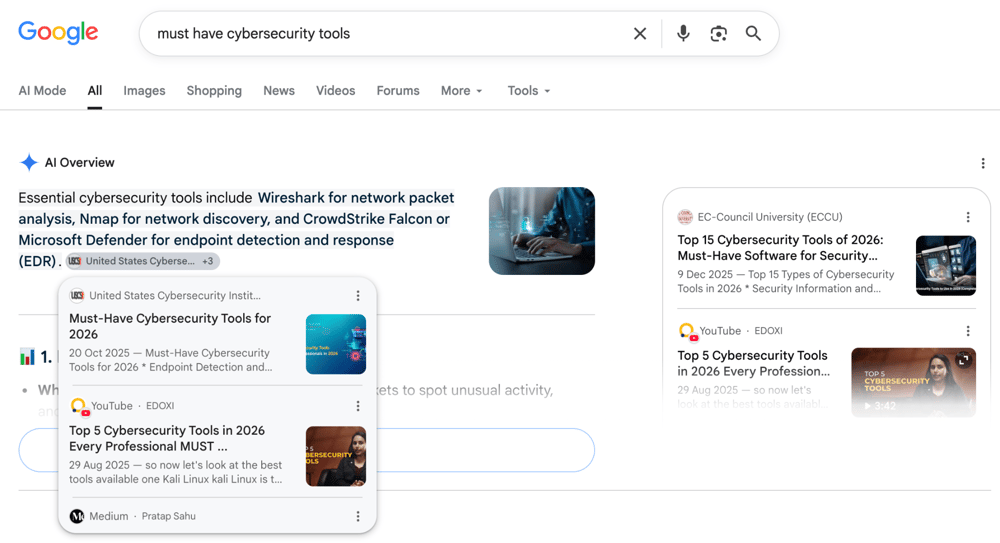
Atomic answers do most of the work. These are standalone 60-to-120-word answers directly beneath each header, with no "as discussed above" or dependency on the paragraph before it. Position matters too, around 44% of quoted text in LLM citations comes from the top third of a page, so burying your answer beneath 800 words will most likely cost you the citation (Source: Kevin Indig).
Entity density is the least straightforward lever. AI systems match content to a question by recognising the things it names, such as the FCA, Consumer Duty, UK GDPR Article 32. Write "regulatory obligations" instead and there's nothing to grab hold of; the sentence could as easily be about aviation or food safety. Content that gets cited names things specifically. Content that gets skipped gestures at categories.
Princeton found adding statistics improved AI visibility by 23 to 33%, and quotations by 28 to 43%.
Machine-readable Schema
It’s important to be clear that schema won't win you citations, and, unfortunately, GEO advice has oversold it. Ahrefs tracked 1,885 pages that added JSON-LD between August 2025 and March 2026 and measured no lift. Citera found schema on 69 to 72% of B2B SaaS pages regardless of whether they ranked or got cited.
Is it still worth doing anyway? Yes. Because schema removes uncertainty, telling systems who published this, who wrote it, and what the product actually is. “SoftwareApplication” covers deployment model and pricing; “FAQPage” structures Q&A as retrievable nodes; “Person and Article” link author credentials to LinkedIn and Google Scholar. Treat it as hygiene, like meta descriptions in traditional SEO.
The Roadmap to Winning in AI Answers
Generative Engine Optimisation has never been an editorial problem, it's a structural one. Before you green-light your next article, audit what you have: check, have you named the authorities your sector's models trust, and does the answer sit in the first third of the page? Fixing existing assets rewards you more reliably than adding new ones.
Start with the pages you'd most want quoted. And if you'd like a second opinion on where your content stands, get in touch with Clarity.