- Some additional information in one line
- Mar 2 2026
Hyper-Personalisation, AI Ethics, and the Future of B2B Marketing with Dario Debarbieri, CMO at HCL Software
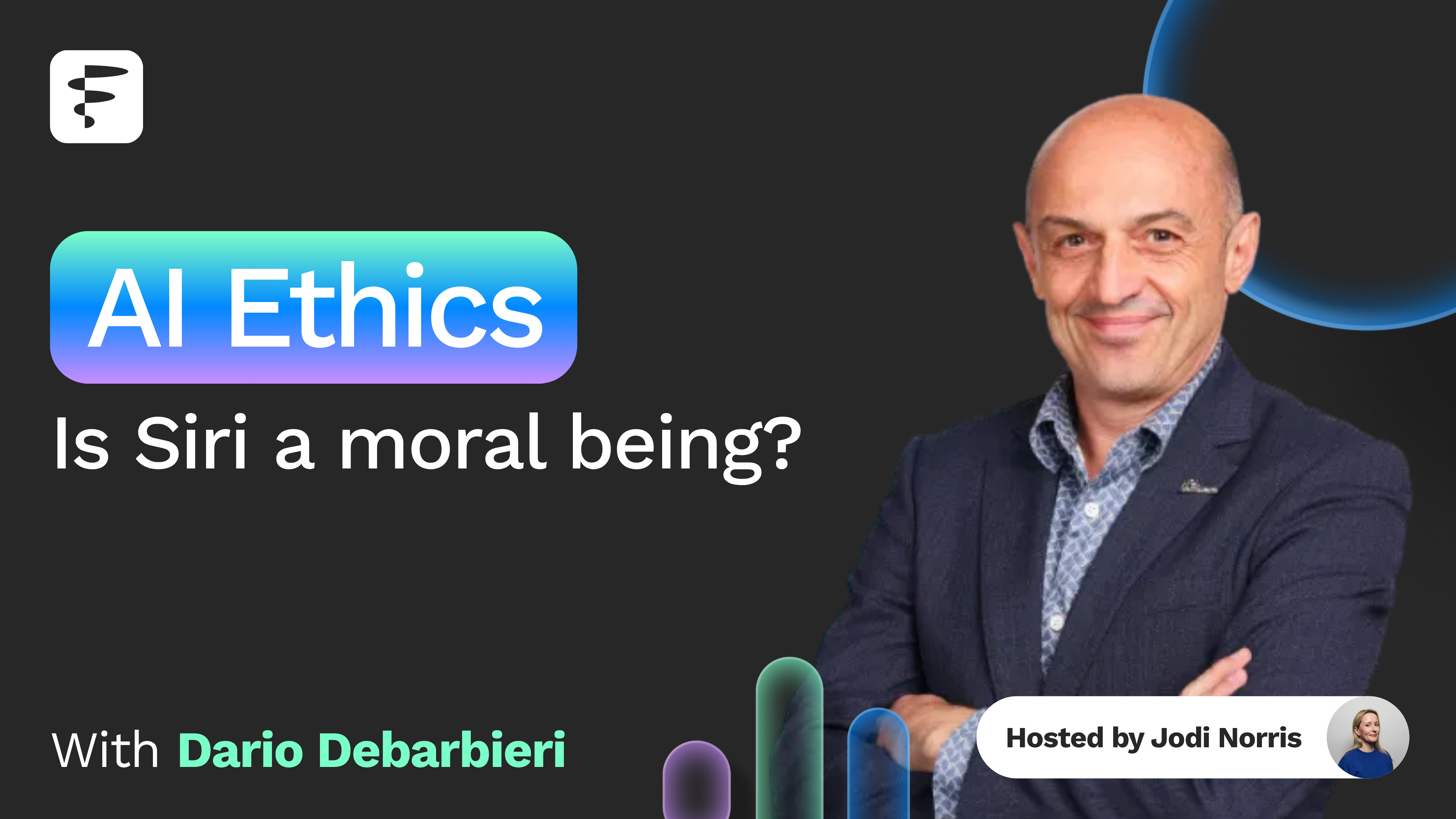
In this episode of the FINITE Podcast, Jodi sits down with the brilliant Dario Debarbieri, CMO at HCL Software. With a career at the intersection of marketing and AI, Dario offers a candid look at the Intelligence Economy and what it means for the modern B2B marketer.
We explore a world where artificial intelligence interacts with audiences in real-time, reading the sentiment of minute digital movements to deliver personalized content in exactly the right context. Dario explains why the traditional 4 Ps of strategy may now matter less than your data quality, and why marketers must evolve from artists into engineers to survive.
Key topics covered in this episode include:
The Intelligence Economy: Why data is the new oil and how to use the right tools to extract and refine it.
Marketers as Engineers: How the role of the marketer is shifting toward technical precision and data science.
Context is King: Moving beyond simple demographics to understand the situational context of your buyer.
The Ethics of AI: Navigating the fine line between helpful personalization and creepy intrusion (e.g., following a customer to their Alexa at bedtime).
Listen below, on Apple Podcasts or Spotify
Or watch on YouTube
And once you’re done listening, find more of our B2B marketing podcasts here!
The FINITE Podcast is sponsored by Clarity, a full-service digital marketing and communications agency. Through ideas, influence and impact, Clarity empowers visionary technology companies to change the world for the better.
Find the full transcript here:
Jodi (00:01)
Hi everyone, and thanks for tuning into another finite podcast. To be honest, I don’t really know where to start with introducing this episode for you. The subject is complex to say the least, and it feels like the only way to effectively communicate its key ideas is through our guests’ descriptive conversation. We explore a future age of marketing where automation and personalization collide. A world where artificial intelligence interacts with your audience in real time.
reading the sentiment of minute digital movements to deliver personalized content in exactly the right context. It’s a world where marketers are engineers and where the traditional four P’s of strategy matter less than your data quality. Today we explore how to read the mind of your audience, one-to-one and at scale, and a future where hyper-personalization sets companies apart until it inevitably becomes the norm.
All this and more with Dario Debarbieri, an incredible strategist and technologist who has been sitting at the intersection of marketing and AI for decades at IBM, becoming the vice president of digital channels before becoming CMO at HCL Software. It’s such an inspiring episode. I really hope you enjoy.
Jodi (01:13)
Hi Dario, thank you so much for joining me on the finite podcast today.
It’s so exciting to have you here. been thinking about this topic for a while now, ever since you mentioned it, and it’s been on my mind, the way that marketers can use automation to really transform their lead generation and email campaigns and pretty much every single touch point with an audience. I’m excited to hear you explain more about that.
and how you’re thinking about personalization and automation. But before we do that, I would love to hear more about your background, where you have forged your path in the marketing world and your kind of special, special touch in marketing.
Dario Debarbieri (01:58)
Okay, cool. So Jodi, long, long time back, I was lucky enough to be able to apply my marketing knowledge and background in technology. And that started back in 1997 for a very large IT corporation and was lucky enough that back in 2003, they launched this AI division.
which gave marketers kind of the first playground of combining marketing and AI tools to what came a few years later back in 2010 or around 2010, the combination of MarTech and AI started to be developed at that company. And I was lucky enough to be there and see firsthand what meant AI.
Jodi (02:52)
you
Dario Debarbieri (02:53)
in terms of marketing, what is the impact of AI to marketing and marketing and its performance and then analytics, data and everything that.
you know, now we see because we’re dealing with it in the present. But back then it was basically a laboratory of AI and Martech, which was absolutely amazing. I spent my last literally 16 years of my career doing AI and marketing. And it’s a fascinating space, right? It basically touches every single space of both technology and Martech.
And I think even in the future, we’re going to see much, much more coming seamlessly, right? Because today we’re dealing with a huge amount of complexity because everything is coming together, right? But I think that in not such a long time from now, we will see the full benefits of marketing AI and hopefully what we’ll see is the true, real hyper-personalization coming up.
Jodi (04:00)
Absolutely. It’s so interesting how AI has only really blown up in the past, what, three, four, five years just because of chat GBT, but it’s been a thing since the 70s and it’s been integrated with the internet since the early 2000s. And yeah, it’s interesting that there’s been this big bubble, as we all know. I’m really interested in what AI and marketing looked like when you first started. Can you give us an example of…
of some kind of marketing tool that was AI powered that you worked on.
Dario Debarbieri (04:33)
Yeah. So back in the days, was called I will mention the company name IBM called it IBM Watson Marketing. It was a division that combined all the market platform they had with basically the Watson AI. And the first shapes and forms of that were applied to campaigns
where you could follow an entire funnel from beginning to end and start building predictive components out of certain behaviors, right? It will showcase.
For example, back in the days, the first versions were if you purchase this product, these may be related products that you are interested on based on other customers behavior, based on historic purchases and based on personal preferences. Back in the day, those were absolutely amazing models. what they were lacking was the
what
I believe is going to happen soon or has to happen soon, which is the proximity in the companies between the data scientists, the marketers, and the chief digital officers. I think that those three, they, at some point, we may see how they all come together in different reporting lines because marketing is as good as data.
And data is good when you can use it and put it to work, right? Otherwise, sometimes, you know, I call it is the new data is the new oil. You may have a massive oil field, but if you don’t have the technology to extract the oil and then to refine the oil is useless, right? It’s just sitting there.
And if you have the infrastructure but you don’t have the oil, then you just have infrastructure. You just need to put them together. You need to combine the oil with the extraction tools and then the distillation tools so you can actually make a product out of it. I think that marketing today has come to being the same. So our oil cannot be buried. We need to extract it and make it.
be meaningful and so, you if you think about it, all these customer data that companies have for years and years and years and even industry available data that sometimes is used, sometimes is not used and platforms that actually give you access to data.
They’re all sitting in silos. They’re sitting almost in a disorganized way that marketers actually go there when there is a specific requirement, right? we need to talk to group A and group B and send this promotion. And that’s it. And it’s with better tools. We’re doing things the same way we did in the 80s and 90s. But now with AI, you can change all that if the data quality of what you have, so if the oil is good,
and you put it together, now AI has this amazing power to basically make it available to you, kind of, it’s the extraction platform that actually will put it in front of you in an organized way. So imagine the oil is the data, the extraction platform is your AI tool that pulls it together, and then it’s just available to you, and then what you do with it, so your distillation plant,
is
basically your intelligence, right? It’s what you want it to be. You can cut audiences in any shape and form. You can start playing with scenarios. You can start defining and doing A-B testing. Even you do campaigns because you have the data. And so now your distillation process is basically how good is the marketing team that is using that oil and that extraction platform.
right, to make it be meaningful, right? What kind of campaigns you make or you can even ask to this platform for ideas. You can actually start exploring, right, and say, what happened if I mix audience A and B? What happens? You what can happen if I have this product and I sell it to this audience? And it will give you ideas. It will actually now with all the technology available, once you have an idea in place, you have satellite.
AI tools that can actually help you create, do the creative, do the videos, put the content together, and you have marketing platforms like HCL Unica that actually puts it all together so when you launch campaigns you’re doing it on the back of intelligence. And the AI assistant can actually even predict
your performance before you run campaigns. All of that is just what’s actually popping up in terms of.
massive conversion of the way we used to run campaigns to now basically having AI or machine and humans actually building these campaigns together, right? So that’s where we are now and that’s where we come from. in the early stages, it was more simple, right? The challenge was the data.
the oil was extremely disorganized and nobody thought of data as a high quality value item, right? It was not an asset. It was just a database that you needed to send an email to your customers for Christmas, right? I’m exaggerating, but of course, banks have been using data properly for many, many years, right? Because they need it. But for the most part, data was just something that was sitting there and it was not seen as something you can monetize.
and monetize in a way that you can actually reach down to a single individual with so much knowledge that you can make a conversion, right, just because you’re smart about the way you use that oil, right, or the data. Now we have that. And so that’s what’s absolutely amazing of what we have in our hands these days, right, from just
access to data to now knowledge data that allows you to go as hyper personalized as you want. Long answer, but I wanted to talk about the present.
Jodi (11:03)
Fascinating. No, no, no, really great.
Absolutely. There’s so many thoughts that pop into my head. I think as you were speaking, I was just thinking about the changing role of the marketer. And it’s interesting that you say that market is almost synonymous with engineers in a way or analysts in a way. And it contrasts against other conversations I have where marketers are
at giving the human touch and they’re still the creative ones and they’re the artists of it now because I think Cisco, I was talking to the revenue chief CMO there and she was saying how they are kind of creating this big data, what did you call it? Like a gas silo or something and they are using AI to do the extraction. So they’ve got like a kind of proprietary tool that sits
over their data and you just type like, what’s this segment thinking about this at the moment and what can I do to target them? And that’s how they’re using it. So yeah, I’m wondering your thoughts on the kind of the changing role of marketing and how you see marketers really fitting into this.
Dario Debarbieri (12:19)
Yeah, it’s a great question. I think the human aspect of marketing will not go away because the creativity and the human understanding of humans will continue to be important for any company, right? Because at the end of the day, that last touch that you put on your campaigns,
most times what makes a huge difference is the human component. So that said.
that individual cannot rely anymore on just a good slogan or on a good idea or on a new brand, right? Because if you only have that, you will be exposed to data intelligence. So it’s true that marketing as a profession, you know, and hopefully back early from university, will realize that they need to train marketers, like you said, ⁓
more like engineers and a little less like the four piece. The four piece continued to be relevant in our industry. But what was never exposed in such an obvious way during the thinking of the four piece was.
the new world of data and AI, right? Which has and will make marketers to have to become incredibly more technical.
to actually apply the right tools for the right times, right? So not all AI is cut the same way. You know, there will be professionalization of those who use creative tools for AI. It will not be the same as someone who uses, let’s say, predictive ⁓ AI or machine learning models to recommend actions based on a behavioral pattern or sentiment.
right? Those are two different individuals within marketing that will use two completely different AI tools. so specialization within AI will also happen. It will not be the case that, you know, maybe because
It’s of interest for me. And I love technology and I love marketing that I may know a lot of AI tools and I can use all AI tools almost to the point to be dangerous with every single one of them. And I could probably do by myself with 15 AI tools and my knowledge to put a good, extraordinary campaign based on AI and humans. But the reality is that in maybe one or two
years, if I want to do a really good AI-based video, I will not be able to compete with someone who specialized only on AI video production, or someone who specializes on hyper-personalization.
data using AI and predictive models. And so there will be specializations within our industry of people that’s gonna go really, really deep, which means all of us will need to become significantly more technical. We will need to know the tools. If you go back to our early days, I remember that back in the 90s, to me, knowing how to use really well Adobe was like being one step ahead of anyone else.
Thanks.
because you had the tools to do design and add like nobody else, right? And everybody wanted to have that. That was like our new software, cool technology of the days, right? And so if you had that, which most agencies obviously had, but not the customers, you would be one step ahead. I think that what’s happening today is exactly the same, but significantly more technical, right? Now you have to have the tools
to actually do things better. And there are so many tools that are coming that they will create some sort of a specialization. Now, the reason why I said before that the chief digital officer and the data scientists, which many marketing teams do have, right? I have on my team data scientists, but it’s not true for every organization. If you don’t have the combination of digital officers and
⁓
data scientists and you build a more technical marketing organization, most likely you will be left behind, right? You will create a gap between the industry and yourself. Because when you see, you know, now more practically, when you go to your phone and you see an absolutely gorgeous campaign that has your name, and by the way, it happens to be linked
with the trip that you just booked to the Caribbean and they offer you the rental of kitesurfing equipment is because they know you. And you are much closer to the clique than you were ever before. Because it’s just right there. It’s really available to you. The only way to do that
Jodi (17:11)
you
Dario Debarbieri (17:19)
today is if you know technology, if you understand AI, and if you use it. You can be very smart and do a lot of things manually still. But if you have, you know, like big large banks in the US or in Asia or in Europe, and you have to do million of communications per day, you will be left behind.
You need this, right? You need to evolve. And if you want to reach to those audiences at such massive volumes, then you have to change. And you have to understand that the combination of data, AI, and martech platforms is the only way.
Jodi (18:02)
Yeah, so you have to be very strategic about what you choose to automate and these really hyper-personalised, real-time personalisation about, you know…
moments in time when people are most kind of ready to purchase or ready to make any decisions. That’s kind of where you might want to personalize as opposed to, you know, a big brand activation campaign that might require a bit more artistry. Absolutely. I keep going back in my head to how you mentioned like, yes, the four P’s are important, but you’re right. Like they’ve been completely disrupted by this phenomenon.
price, example, dynamic pricing has been around for a while and it’s not going anywhere. Like how do marketers then strategize price if it can be personalized according to market demand and environmental and global shifts? And even positioning, do you ever think we could get to a point where positioning itself can be
personalized on a one-to-one level at scale.
Dario Debarbieri (19:11)
Yeah, so think about where we are, right? think, you know, just last year…
You know, we were brainstorming on a campaign and, you know, I came up with this coin of, know, what I think we are is now we are in the intelligence economy. Right. And the reason why this is the intelligence economy is because everything needs to be based on some form of intelligence. need to know something before you do something. Otherwise, you’re just shooting in the dark. Right. Like we used to put
back in the days, billboards in a highway, just expecting that they will work. ⁓ And yeah, they work, but you just don’t know how, but they work. Things have changed, so now we have the data to prove it. And so when you think about getting to a level of understanding of what’s happening, now you need to understand to deliver hyper-personalization, pricing, offers, all of that, you need to understand
the situational context of every single interaction. You need to understand the history, you need to understand the context of now before you can actually satisfy a need, right, or make a conversion. So this kind of new intelligence economy is like forcing us to say, okay, what do I know and what do I need to know Jody?
So I can have Jodi buy this thing that I sell, right? And.
Today, it’s a little bit of a manual task and challenge to get Jody, right? Because Jody posts on Instagram, Jody posts on LinkedIn, Jody has a profile on the web, Jody has a work profile, and maybe whatever history Jody posted ever, right? So with that, you just have a just a little glimpse of Jody, right? You can make a lot of assumptions of Jody, but.
You really don’t know where Jodie is now, right? So knowing where Jodie is now is the tough part, right? Because that’s a lot of guessing. Jodie can be now in the office. Jodie can be now having a coffee. Jodie can be now in a conference room talking to somebody. I don’t know what is Jodie, right? All I know about Jodie is when you post something, when you do an action that will actually let me know that you’re a
about to do something, you’re purchasing an air ticket, you’re buying something for your house, you are on Amazon buying something for you. Those are the triggers that actually allow me to know a little bit more about Jodi now. So what is the challenge of hyper-personalization? Is that timeframe.
in which I don’t know where you are if you’re not on your phone, if you’re not on social, if you’re not anywhere. If you’re sitting in the office having an interview, right? That’s the moment that I don’t know, Jody. So how do we deal with that today? The way we deal with that today is once you select your group,
And once you select the actions or what you want that group to do is you start trying to identify those moments where they will give you those marks. Jodie is green. Now she’s back online. She’s doing this. So when Jodie is doing this, it has to now be relevant to what I need Jodie to buy. Because if you are on Amazon,
buying a pair of shoes and what I sell is software, it’s not a relevant point in time. I just know you’re there, but I cannot put an ad on Jody on software because it will be idiotic, right? I will be wasting my money at that point of reference. So the challenge we have, which we don’t have a solution for, or like a plug and play solution, I would say, is when
Can I get the alert that Jodi is in the context? It’s in the room, let’s say, where I can sell to Jodi what I need. So for us to do that is the combination of everything about what I know about Jodi. And these are the things that we’re working on. Everything that I know or I need to know about Jodi. And then when there are Martech events coming up in the place where you live,
the moment your name comes up in a registration form, then that’s when I get Jodi, right? That’s when I need to start putting Jodi on social media and everything, because I know now she’s ready for that conversation, right? Obviously, when you’re searching, if you’re searching keywords, obviously that will give me a lot of knowledge about what you are doing, which comes to one of the questions you had, which is how freaky is, right? Or what is…
What is accepted or not accepted in terms of hyper-personalization when we start to go to the freak side, the one that we are all scared about? The contextual aspect of Jodi registering to a tech event or the contextual aspect of Jodi going on a Google search or a chat GPT search on what is the best AI martech technology?
almost gives us permission. It’s not a real permission, but it almost gives you permission to talk to Jodie because Jodie in a way somewhere in her brain and this will need to be studied at some point. In her brain, she is open to get information and knowledge because she’s looking for it. So she’s almost expecting that somebody will reach to her, right?
When you say best beach in Brazil to go in February, you almost wanting, right, that the best beach or the best hotel or the best car company in that city actually has a banner there, right? So you can see, wow, the Hilton is great. The cars are very cheap and it has ocean view. Clicked.
You don’t mind that Hilton actually reached out to you. So is that an invasion of privacy or is it just the perfect time because you are in the room? I think that dilemma will stay with us for a long time because these bots are going to be more and more more efficient. And the moment you leave the page, you’re to go to your phone and say, Jodi.
come back to where you started, right? Hilton has a great promotion for you. That may be a challenge, right? That may be questionable if from your interaction on the web, you have to have it on your phone, right? What is right and what is wrong? I don’t think we know that now because it’s also gonna be another challenge which is not every single individual is the same. So my level of acceptance of that kind of invasion
is much higher than Jody’s because I do want them to follow me until I get the best price. But some people may say, no, it’s freaky. I want to choose my own option. It’s fine that Hilton is promoting there, but I’m going to look for something else, right? Which is totally acceptable. And maybe they will be bothered with the next message on the phone or WhatsApp or whatever with that extra offer, extra step. So hyper personalization to me means two things. One is
We as marketers, we just need to know. We need to know. We need to know who is Jody, where is Jody, and where is the right time to contact Jody. And then, as marketers, our own ethics will define how far I go, and the company ethics, and the company culture. And what I think, there are no manuals or books written yet, is on how companies, and how deep, and how far companies.
I’m going to go because most CEO boards, they’re not even having this discussion. They’re just letting the marketing guy do their job. And as long as they don’t mess it up, then they don’t talk about it. But they should. Because if I am an ethical person and I do ethical marketing and somebody is not doing ethical marketing, I’m almost playing with unfair competition. Because I will reach to Jodi all the way to the website and I will not go on the WhatsApp.
But maybe maybe my peers in the industry may follow you to bed. Right. When you say, Alexa, put some meditation music so I go to sleep. And before she does that, Alexa says, Jodie, remember the Hilton Hotel that you were looking for today? It just gave you a 10 percent off. Is that right or wrong? I don’t know. For that, you may be OK for Jodie may know absolutely not be OK. Right. So.
What is right and what is wrong in terms of the ethical hyper-personalization flow of a marketer today? I think needs to be defined. We have the tools. Now we have the data, which needs, has a long way to go because data is heavily disorganized in many, companies and the culture of data is not there.
Just think about a seller. A seller puts an opportunity in the system only if they don’t feel that they will be chased on that opportunity and pipeline the next day. If they feel that they’re going to be pressured on that, they don’t even put the opportunity in the pipeline. So they hide it. So that’s poor quality data already there because your marketing campaign did deliver on the lead, but the seller doesn’t put it on the system, right? Because they don’t want to explain whether they’re going to close that deal or not. data evolution.
needs to happen. Ethical behavior needs to be explained and we need some guardrails. I don’t know if those guardrails are company guardrails, industry guardrails, or even law guardrails. I don’t know. GDPR came to do a lot of goodness and greatness for our industry. Do we need a new GDPR that has the ethical answer to
Jodi (29:05)
you
you
Dario Debarbieri (29:25)
How much hyper-personalization can you give? And then the last one is obviously using the right tools at the right time to get Jody in the moment, to get Jody in the room, right? So that personalization is understanding the context, the situational context of the interactions of Jody, right? Sorry for the long answer. I’m going everywhere, but.
Jodi (29:51)
That’s a great answer. Keep it flowing, absolutely. There’s so much to pick out from there. You definitely answered my question around, we’ve talked about in marketing for a long time about the 95-5 rule and how I had someone on who said demand generation is a fake tactic. You can’t push people to buy. They either want to or they don’t. It’s interesting because how do you get
data and AI to understand the mindset of the individual, of Dario, in order to personalize at those right moments. And I think you’re right, the simple answer is showing intent. And it’s interesting how you add so much flavor to this because it’s not just like, do they search B2B CMS into Google anymore?
it’s, you know, have they bought a flight, you know, and they need a hotel. It’s much more nuanced, intense signals that can be intelligently, you know, automated to help marketers like get them at the right time. So yeah, it really helped me understand, you know, how you do really understand that kind of mindset of the buyer and overcome that kind of.
95-5 barrier and how you can actually convince people that they need you and you are at the right place at the right time in those moments and those head spaces. So I feel like I’m noticing personalization at scale quite a lot lately. Like I’ll visit a website, I might buy something on Amazon or something and I’ll get an email in my promotions folder from a company being like, hey, remember us?
And it’s almost got this kind of novelty to it that feels like you’re being listened to, that you’re being understood. Maybe I will pay more attention to that brand. If competition rises and everyone’s using personalization at scale and it’s not even creepy anymore because it’s just so accepted, do you feel like people could almost…
switch off to it like they would, I don’t know, a bus stop ad these days.
Dario Debarbieri (32:06)
100%. I think that’s exactly what’s going to happen, Jody. think humans are very, very smart, right? So you will, in a way, clean the clutter automatically, right? Because now the goodness of all this is that now you know you have access to all the data. You have access to knowledge, and you have access to understand and compare what is it that you want, right? In the past, remember, there were maybe two
companies that were, you know, these soda companies. So your choice was one or the other. And depending on which campaign was more appealing to you, you will go one or the other, right? Today, we do five clicks below that, which is, okay, I want soda. Is soda good for me? How much soda should I get? Right? Which…
Is the flavor that different if it’s cold? You go deeper and deeper and deeper. now, yeah, you can see a huge amount of billboards of one versus the other, and one can be funnier than the other. But that will not change your sense of, I cannot drink so much sugar. Right?
Maybe one glass every once in a while is fine. And that’s it, right? So because we become more and more educated. Now when we’re looking for things that we need and they start to become more complex in a way.
Right. So your purchases become a little more elaborated. Right. So I’m making this up like creams, right. Body creams. know, 20, 30 years ago, that was just body cream. Right. There was brand one, brand two. What was inside? Who knew? Right. Now you’re looking very deep into, you know, what the cream actually does for you. What are the components? What? And so.
When you’re searching and we’re looking, you are already hyper-personalizing yourself. You’re almost telling the world what is it that you need, or what is it that you want, or what is it that you don’t in something. marketers do have a true opportunity because buyers have become so smart that now
when they’re asking the right questions on their search, or when they’re asking the right questions and interactions on your bot or anywhere, they’re almost telling you what they want. Now, we still have a gap today of being able to read that interaction at that level, because we are not yet using so much of a few tools that are on the side of
sentiment, which is sentiment analysis and facial recognition and analysis, because there are some limitations to how much you can do face recognition and so on, right, which I think is fine. But when we start mixing sentiment with words and search and intention, I think that almost good martech tools will literally tell you what you need.
will literally tell you, if you think about probably the best example of today, without being at that level of mass intelligence, which we may see in a couple of years from now, when you go to Amazon now, you know, and you’re searching for something, the amount of products that are related with intelligence on what you’re looking for, based on how you prompt your search, they’re quite amazing, right? They’re really amazing.
So just imagine that apply to almost everything we do, right? So if we’re having this discussion and we send this discussion to ChatGPT and our last question is, well, what would be the best martech platform according to everything we said? It may not give you a perfect answer, but it will get you really, really close to what are the top three options based on what.
do a discussion we’re having, and we’ll tell you what limitations there are, what things you can do, what things you can’t do. So I think we’re reaching a point of intelligence where a huge amount of variables are coming together. But there are some that still have some time to be exploited, like sentiment and many other things that.
you know, they’re a little bit harder to crack. At least now. The tools exist, but I think they’re a little bit harder to crack. So for example, Jodie likes certain cream. She likes certain components. And she was convinced that certain brand is the one she needs. But Jodie did not go to the dermatologist in the last five years. And suddenly she developed something that is
allergic to X component. If your medical history is not linked to your search, you may be using a product that you are allergic to. And the marketing or the marketer behind that, not knowing that, may actually give you the incorrect recommendation. Because the machine doesn’t know your health status. Right? So when I say data is the new oil,
is because in those oil fields, the amount of data that needs to exist to really, really get us is so big. It’s so big and it’s so complex that it will take us some time to get there, not because of lack of availability, but because of the ethical issue. Would you like your hospital to share your information when you’re buying creams?
That’s a question you may need to answer at some point, right? That nobody can steal or should steal from you, right? That should not be, that should be optional. That should not be that, in my view, right, as an ethical marketer. I will not like my hospital to share my data for as good as it is for me when I’m health products. I don’t want that. I want to be asked if, you know, for that particular purchase, I can or cannot use that, right?
So obviously this is an example, it’s not real, right? But I’m sure that there will be many instances where we will be exposed to that level of hyper-personalization that will open up ethical questions on can I access this data or not to give them the answer, right? And to the point of, you know, that you asked me is are we gonna be able to clean through the clutter? The answer is 100%, I think we will.
I think we will be because we will continue to buy based on who we are. Right. Taste cannot be replaced with AI. Right. If you like green, you like green period. Even if they tell you that the color white in your insurance car will lower your insurance cost, you will not buy the white car. Right. You will buy green and you will pay an extra few bucks on insurance because you just like it. AI cannot predict that. AI may say she’s crazy.
I told her that she would save money if she buys wine. I don’t understand Jodi’s behavior, but it will keep learning. And at some point, we’ll understand that humans sometimes are unpredictable because we have taste. And so are we going to end up doing what we want at the end of the day? Yeah, I think so. I think we will continue that way. But we will have more tools to make better and better informed decisions. And I think marketers are
Jodi (38:59)
You
Dario Debarbieri (39:26)
big scale will be much better at what they do because they will get us a little more, right, at the right time. I think it comes down to just that, really.
Jodi (39:37)
Absolutely. Yeah, taste and now that you mention it with soda, pure biological survival instincts. I don’t know if you’ve heard about this, like, mass exodus from social media. All of the Gen Zers are like, I’m going on a social media cleanse. I’m detoxifying my life. And it’s because we want the best for ourselves and we want to be healthy and it’s addictive.
per an algorithm as social media can be that thinks it’s got us in its hooks and can keep us on the apps for hours, we still have this immense survival instinct slash willpower that says this isn’t good for me. So it’s interesting to see that tension and it’s interesting to hear you explain the human condition through these ethical dilemmas of data. So it’s a really inspiring, thank you so much, Dario.
I think that’s about all we have time for today. But I’d love to have you back on. It’s been such an inspiring conversation. I hope you’ve enjoyed it as much as I have.
Dario Debarbieri (40:34)
I did. did, Jody. Thank you so much. Yes. Yes. I love these conversations. you know, just just to say hopefully the next one is, you know, there is an intersection coming between AI, quantum and fusion energy, right, which will literally change everything that we know as we know it today, which will affect marketing and beyond. Right. So what’s happening? I think we are ⁓ in an amazingly interesting time.
for marketers and ⁓ AI because it’s one of those few professions where we’re touching people, we want to touch people’s emotions, and we want people to actually buy what we want. So the question that that raises is, is a good marketer with good tools better than a salesman?
Jodi (41:19)
That’s a great question to end on, Dario, and one that I know our listeners can definitely think about.