

Last week, we brought together a room of senior marketing, communications and technology leaders on one of London's best rooftops to talk about something most B2B brands are still underestimating: how the game of influence has changed.
The premise of the evening was simple. The people signing enterprise contracts are the same people scrolling LinkedIn, listening to podcasts on the commute, lurking in online communities and, increasingly, asking AI tools who the best players in a category actually are. As our CEO, Rachel Gilley, put it to the room: the wall between B2B and B2C has come down. What follows is what our panel had to say about what that means, and what to do about it.
"The wall between B2B and B2C has officially come down." - Rachel Gilley (CEO, Clarity)
Best practice hasn't changed. The stakes have.
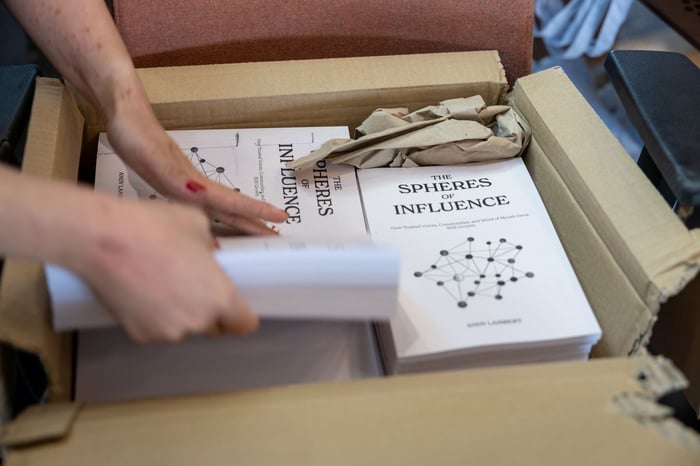
Andy Lambert, founder of AcademyAI and author of Social 3.0 and Spheres of Influence, opened with a statistic worth sitting with: 94% of buyers now use LLMs somewhere in the buying journey. His read on generative engine optimisation (GEO) wasn't that it's a new discipline to master, but a force multiplier on fundamentals brands should have been getting right anyway: solid SEO, consistent digital PR, real social influence. GEO doesn't reward novelty. It rewards brands that were already doing the work, because it collapses years of scattered buyer research into a single, high-stakes input.
"Be more curious about how customers get inspired to buy products in your space - the answers are actually just hidden in plain sight." - Andy Lambert, Founder of AcademyAI
Tom Telford, Clarity's Chief Digital Officer, agreed. The buying journey has compressed, but the underlying logic hasn't shifted as much as the panic suggests. Brands with strong SEO foundations are, in his words, "probably doing all right" — because those same foundations are what AI systems are built on. What's changed is the reward structure: a single consistent narrative across every channel now counts for more than it used to, because AI is stitching those channels together into one answer, whether a brand likes it or not.

Chloe Parker, Partner at Clarity, offered the panel's sharpest reframe. The instinct when reputation feels newly exposed is to grip harder. That instinct is wrong. Brands were never as in control of their narrative as they assumed - AI has simply made that lack of control visible, by surfacing everything: old reviews, neglected product pages, that one page on the website nobody has touched in seven years.
Her advice was deliberately unglamorous: measure, and measure honestly. She grouped the problems AI surfaces into three buckets - information that's true but uncomfortable, information that's outdated, and information that's simply wrong. Each needs a different response, but none gets fixed by ignoring it.
"You're not more out of control than you've ever been. You never had control to begin with." - Chloe Parker, Partner at Clarity
Yasmine Triana, PR and communications specialist, extended the point on AI's long memory. Outdated information doesn't fade the way it might have on page three of a Google search - it persists, unless a brand proactively communicates what's changed since. She also flagged an underappreciated advantage for smaller, specialist companies: narrow focus reads as authority to AI systems in a way that broad, generic positioning doesn't.
The six spheres of influence
Andy Lambert closed out his section with a framework from his book for where B2B influence now actually sits, working through six areas in order: employees active on platforms like LinkedIn; customers, and building something people actually want to talk about; communities; niche influencers, an increasingly serious force in B2B; established macro-creators; and domain experts. None of these are new channels. What's new is that AI systems are now reading across all six simultaneously to form a single judgement about a brand.
What you should do differently tomorrow
Asked for one action each, the panel's answers converged on the same underlying discipline: stop guessing what AI says about a brand, and go and look.
Chloe Parker: Ask the LLMs the questions buyers are likely asking — the flattering ones and the uncomfortable ones. Ask more than once, over several days. The answers move.
Yasmine Triana: Ask actual clients and prospects how they found the brand, and what they searched to get there.
Andy Lambert: Get curious about how buyers in your category get inspired to buy at all.
Tom Telford: Look past ranking and coverage to sentiment - not just whether a brand is mentioned, but what's actually being said, and how.

An exclusive first look
Closing the evening, our CTO, Will Julian-Vicary, previewed the newest addition to Surfacd, Clarity's AI visibility platform: a new Reputation module. Where Surfacd has focused on visibility - whether and how often a brand shows up in AI answers - Reputation goes further, showing how AI is actively describing, judging and comparing a brand against its category. It's live on the platform now, with a free trial available and Reputation included at no extra cost for a limited period.

The takeaway
Every panellist arrived at some version of the same conclusion, from different angles: nothing about good marketing practice has fundamentally changed. What's changed is that AI has removed the option to be vague, inconsistent, or out of date and get away with it. Coordination across channels, narrative and teams isn't a nice-to-have anymore - it's the only way a brand's reputation stays coherent when AI is the one assembling the story.
Curious where your brand stands in AI-generated answers? Start a free trial of Surfacd to see how AI is currently describing your reputation, and speak with a senior advisor about what to do next.